When Overzealous Neighbors, HOA Power Plays, and a Misused Rule Turn a Peaceful Move-In Into a Costly Lesson About Control, Boundaries, and Unexpected Justice That Proves Meddling Can Backfire Harder Than Anyone Anticipates in Suburban Life

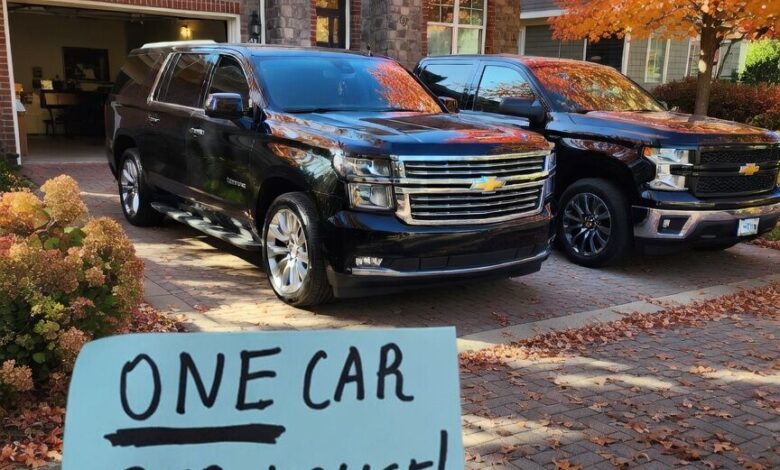
Jack and I had spent months imagining our move—peaceful evenings, polite nods to neighbors, and the quiet comfort of blending into a tidy, well-managed neighborhood. The house itself felt perfect for that vision: simple, welcoming, and with a driveway wide enough for both our cars without causing any inconvenience. On our first afternoon, before we’d even finished unpacking, Lindsey showed up at our door with a plate of cookies and a carefully practiced smile. She spoke about the neighborhood’s sense of community and the role of the homeowners’ association in keeping everything orderly. But as the conversation went on, her tone shifted. Her attention drifted toward our driveway, and she explained—slowly, almost deliberately—that the HOA allowed only one car per driveway, no exceptions. The rule seemed unnecessary, especially since our cars fit comfortably, but she repeated it more than once, emphasizing potential consequences. We thanked her, took the cookies, and dismissed it as overenthusiasm from someone who liked to feel in charge. At the time, we didn’t realize her visit was less a welcome and more a warning.
For the next few days, nothing seemed out of the ordinary. We unpacked, explored the area, and settled into our routine, parking both cars as we had from the start. There were no notices, no official letters, and no complaints from anyone else. It reinforced our assumption that Lindsey’s concern was more personal than procedural. Then one morning, everything changed. A loud mechanical rumble outside pulled us from sleep. Jack peeked through the window and immediately stiffened. Two tow trucks were in our driveway, lights flashing, operators already securing our cars. We rushed outside, still half-dressed, trying to understand what was happening. One of the drivers calmly explained he had authorization from the HOA to tow both vehicles for violating parking rules. The speed and lack of warning were overwhelming. As we stood there trying to make sense of it, I noticed Lindsey across the street, standing in her robe with a coffee mug, watching quietly—as if she had been expecting this all along. In that moment, it became clear: this wasn’t about enforcing rules—it was about control.
The aftermath was immediate and frustrating. Our cars were gone within minutes, leaving behind nothing but stains on the pavement and a deep sense of violation. Getting them back cost us time, money, and unnecessary stress. But once the shock passed, we started digging for answers. We reviewed HOA policies, spoke with our landlord, and began piecing together what had happened. The rule Lindsey mentioned did exist—but enforcement required formal notice and a grace period, neither of which we received. More importantly, Lindsey had no authority to initiate towing. She was simply a volunteer who reported issues, not someone allowed to act on them. By going directly to a towing company, she had bypassed procedure entirely. Our landlord was furious, especially given the legal and financial implications. Complaints were filed, documentation was submitted, and what had started as a personal conflict quickly became an official issue.
From there, things unfolded quickly. The HOA board launched a review, and as word spread, other neighbors came forward with similar experiences—small incidents that, taken together, painted a pattern of overreach. Lindsey’s behavior hadn’t gone unnoticed; it had simply gone unchallenged until now. The towing incident pushed things too far. The HOA formally apologized to us, covered all expenses, and fined Lindsey for acting beyond her authority. She was removed from her volunteer position and warned against further interference. The shift was immediate. The same neighbor who had once watched confidently from across the street now avoided eye contact altogether, retreating behind closed curtains whenever we were outside. The control she had tried to assert disappeared almost overnight.
After that, the neighborhood felt different—but not in a negative way. There was a quiet reset. Neighbors became more approachable, some even stopping by to introduce themselves properly. It was as if the situation had clarified something for everyone: that rules are meant to support a community, not dominate it. We learned how important it is to understand those rules, rather than simply accepting someone else’s interpretation of them. HOAs may have structure, but they’re still shaped by the people within them—and without accountability, that structure can be misused.
Looking back, that morning with the tow trucks marked a turning point. What started as a simple move-in experience revealed something deeper about boundaries, authority, and fairness. Lindsey’s attempt to control the situation ultimately cost her credibility and standing, while we gained a clearer understanding of how to navigate the system. Today, we still park both cars in our driveway—legally, without issue—and with the quiet assurance that standing up calmly and knowledgeably can make all the difference.