The Shocking Babysitting Bill From My Daughter-in-Law That Sparked the Ultimate Family Revenge and What Happened When I Left Her a Handwritten Note Charging for Every Minute of Love Care and Wisdom

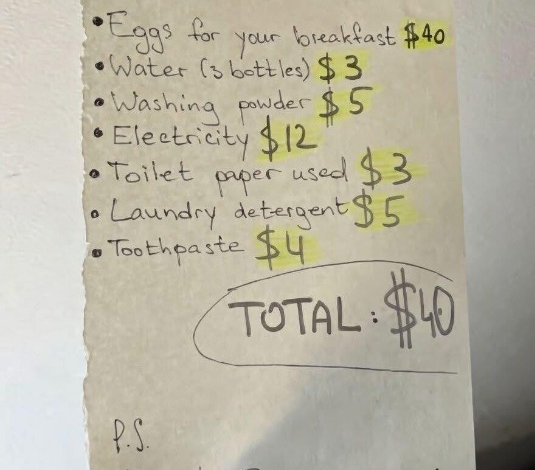
When my daughter-in-law asked me to babysit for the weekend, I pictured the usual things—sticky fingers, bedtime stories, and the quiet joy of being with my grandson. What I didn’t expect was to come home to a bill.
My name is Margaret. I’m in my seventies, and I’ve always believed that family helps family without keeping score.
That weekend with little Oliver was everything I love about being a grandmother. We built towers only to knock them down in fits of laughter, read the same story over and over until he could recite parts of it himself, and shared meals I made just the way he likes them—extra cheese, extra care. When he woke up crying in the middle of the night, I was there to hold him, to calm him, to remind him he was safe. I was tired by Sunday evening, but it was the kind of tired that comes with love.
When my son Lucas and his wife Lila returned, they looked refreshed. I hugged Oliver goodbye, helped them settle back in, and drove home feeling content.
That feeling didn’t last.
The next morning, my phone buzzed. It was a message from Lila—a photo of a handwritten note left on their kitchen counter. At first, I didn’t understand what I was looking at. Then it sank in.
It was a bill.
She had listed everything I had “used” during the weekend—eggs, bottled water, laundry detergent, electricity, even toilet paper. At the bottom, neatly circled, was a total: $40. Beneath it, a polite note asking me to send the money by the end of the week.
I sat there in silence, staring at my phone.
It wasn’t about the money. It was what it represented. After everything I had given that weekend—my time, my energy, my care—I was being treated like a guest who had overstayed her welcome, not a grandmother who had stepped in out of love.
I could have reacted with anger. I almost did.
But instead, I chose something else.
I sat down at my kitchen table and wrote my own note.
I used the same format—neat, organized, deliberate. At the top, I wrote: “You Owe Me.”
Then I listed what couldn’t be measured so easily.
Hours of care.
Patience during tears and tantrums.
Meals prepared with love.
Stories read again and again.
Comfort given in the middle of the night.
A lifetime of experience, quietly shared.
Next to each, I wrote a number—not because I believed those things had a price, but to make a point. The total came to far more than forty dollars.
At the bottom, I added a note: that love, care, and family support aren’t transactions. They aren’t things you itemize or invoice. They’re given freely—or they lose their meaning entirely.
I left the note at their house, along with a small toy for Oliver.
The response came quickly.
Lila called, upset, saying I had overreacted. I stayed calm and told her the truth—that her note had hurt me deeply, and that mine was simply a reflection of how it felt to have love reduced to a bill.
Later, Lucas reached out privately. He apologized. He admitted they hadn’t thought about it from my perspective.
That was the beginning of a much-needed conversation.
Over the next few weeks, we talked—really talked. About expectations, about stress, about the ways modern life can make everything feel transactional, even within families. Lila admitted she had been overwhelmed, trying to juggle responsibilities and finances, and had started to see everything in terms of cost and control.
I shared how much I loved being part of Oliver’s life—but also how painful it felt to be taken for granted.
It wasn’t an easy conversation. But it was an honest one.
We set boundaries. Agreed to communicate better. Made space for appreciation instead of assumption.
And slowly, things changed.
Now, when I spend time with Oliver, it feels the way it should—warm, natural, uncounted. Lila thanks me more often. Lucas steps in more. There’s a sense of balance that wasn’t there before.
Looking back, that bill could have created a permanent divide.
Instead, it became a turning point.
Because sometimes, it takes a moment of shock to reveal what’s been quietly building underneath. And sometimes, the best response isn’t anger—it’s clarity.
I still keep that note I wrote. Not as a reminder of conflict, but as a reminder of something more important:
That love, when treated like a transaction, loses its meaning.
But when protected with honesty and respect, it grows stronger.
And now, when I sit with Oliver—reading stories, hearing him laugh, watching him grow—I don’t think about what anything is worth.
Because some things were never meant to be counted.