Elon Musk’s Daughter Questions Donald Trump’s Iran Strike Decision, Suggests UFO File Release And Escalating Conflict May Distract From Epstein Controversy, Highlighting Political Tensions, Public Skepticism, Conflicting Narratives, And The Intersection Of Foreign Policy, Transparency Claims, And Domestic Scrutiny In A Deepening Debate Over Motives, Timing, And Truth In Modern American Politics

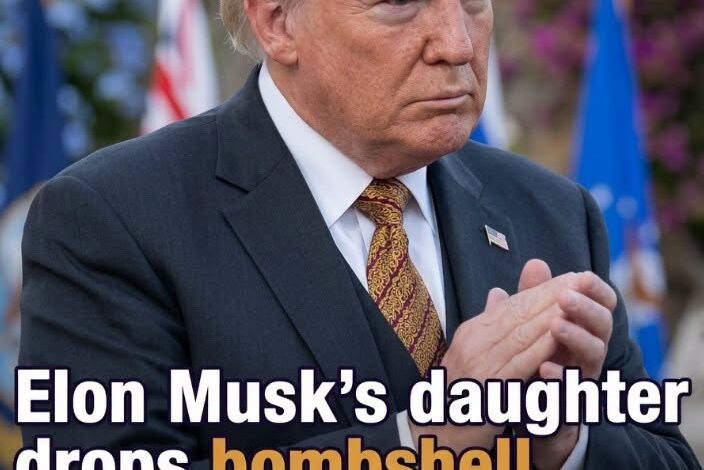
Trump’s apparent willingness to consider military involvement in a potential conflict involving Iran has become a revealing test of what his past promises truly meant. During his campaign, he positioned himself as a leader of restraint—someone who would avoid foreign entanglements and put “America First” above all else. He drew a clear contrast between his approach and what he described as the interventionist tendencies of traditional political figures, including rivals like Kamala Harris. Now, as tensions tied to Israel’s security concerns and Iran’s nuclear ambitions are raised as justification for possible action, many of his supporters are left questioning whether those earlier commitments reflected a genuine philosophy or a strategic stance shaped for the moment.
At the same time, the situation at home remains unsettled. The release of documents related to Epstein—where Trump’s name appears among numerous others—has reignited debate and suspicion, despite the absence of confirmed wrongdoing. The reaction has been swift and deeply divided, fueling partisan arguments and amplifying distrust. Adding to the atmosphere of uncertainty, voices like Vivian Wilson have suggested that renewed attention on UFO disclosures could be serving as a distraction—an idea that taps into a broader concern about how information is managed and presented to the public.
This convergence of foreign policy tension and domestic controversy highlights a deeper issue: the growing difficulty of separating fact from framing. Classified briefings, selective declassifications, and sudden geopolitical developments can all shape public perception, intentionally or not. In moments like this, many Americans find themselves trying to navigate a landscape defined by incomplete information, competing narratives, and shifting priorities.
What remains most striking is the widening gap between what is promised and what ultimately unfolds. As political leaders respond to evolving global and domestic pressures, the public is left to interpret not just actions, but intentions—often without a clear or consistent picture.