I Raised My Granddaughter After My Family Died in a Snowstorm Crash – Twenty Years Later, She Handed Me a Note That Changed Everything

People say time heals everything. I used to believe that—until I realized some truths don’t fade… they just wait.
It took twenty years for mine to surface.
I’m 70 now. I’ve buried two wives, said goodbye to more friends than I can count. At this point, you’d think nothing could shake me.
But grief doesn’t leave. It just changes form. I thought I had made peace with mine.
I hadn’t.
The truth began on a night when the snow fell like it meant harm.
It was just days before Christmas, twenty years ago.
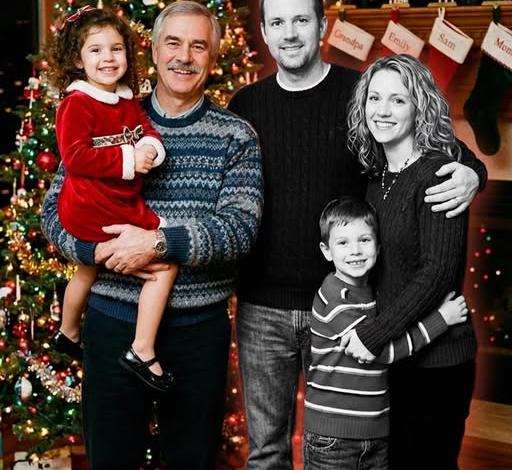
My son Michael had come over with his wife, Rachel, and their two kids. We had dinner, laughed, did the usual holiday routine. The kind of ordinary night you don’t realize you’ll replay forever.
The forecast had called for light snow. Nothing serious.
They were wrong.
Michael left around 7 p.m., holding little Emily in his arms, half-asleep in her puffy coat. He smiled at me in that confident way, like everything was under control.
“We’ll be fine, Dad,” he said.
I remember closing the door and feeling something twist deep in my chest. A warning I didn’t understand until it was too late.
Three hours later, there was a knock.
Sharp. Urgent. The kind that freezes your blood.
It was Officer Reynolds.
He didn’t need to say much. I saw it on his face before he spoke.
There had been an accident.
The road had iced over. The car left the pavement, hit the trees.
Michael was gone. Rachel was gone. My grandson Sam—eight years old—gone.
Only Emily survived.
She was five.
I sat in the hospital hallway while doctors talked about injuries and recovery. Concussion. Broken ribs. Trauma. Memory loss.
They said not to push her. That her mind would bring things back if it needed to—or it wouldn’t.
So I didn’t.
Overnight, I became everything she had left.
I learned how to cook again, how to pack lunches, how to braid hair badly and fix it better the next time. I sat through school plays and parent meetings, pretending I knew what I was doing.
Emily was quiet. Thoughtful. Never difficult. But sometimes she’d look at the door like she expected someone else to walk through it.
We didn’t talk much about the crash.
When she asked, I gave her the same answer every time: it was an accident. A storm. No one’s fault.
She accepted that.
Or at least, I thought she did.
Years passed. She grew into someone steady, sharp, observant. She loved puzzles, mysteries, anything that required digging beneath the surface.
When she left for college, the house felt empty in a way I wasn’t prepared for.
When she came back at 25, working as a paralegal, I was grateful for the noise again—the conversations, the dinners, the normalcy.
But then, a few weeks ago, something changed.
She started asking questions.
Specific ones.
“What time did they leave that night?”
“Did anyone else ever investigate the crash?”
“Was that road supposed to be open?”
It unsettled me. Not the questions themselves—but how she asked them. Like she already knew something.
Then one afternoon, she came home early.
Still wearing her coat, holding a folded piece of paper.
“Grandpa,” she said, “we need to talk.”
We sat at the kitchen table—the same one that had seen everything our lives had become.
She slid the paper toward me.
I opened it.
“It wasn’t an accident.”
My chest tightened instantly.
I tried to brush it off, make a joke, but she didn’t smile.
“I remember things,” she said quietly.
Then she pulled out an old flip phone. Scratched, outdated, something I hadn’t seen in years.
She told me she’d found it in county archives. Not properly logged. Almost hidden.
“There are voicemails,” she said. “From that night.”
One of them had been partially deleted—but not completely.
I felt something cold settle in my chest.
She played it.
The recording was rough. Wind. Static. Then voices.
A man, panicked: “You said no one would get hurt—”
Another voice, sharp: “Just drive.”
Then silence.
It wasn’t enough on its own. But it was enough to start unraveling everything.
Emily had been digging—through records, reports, internal investigations.
And what she found changed everything.
Officer Reynolds had been under investigation back then.
Corruption. Falsified reports. Bribes from a trucking company.
That road? It wasn’t supposed to be open.
A truck had jackknifed earlier that day. Barricades should’ve been there.
They weren’t.
“They tried to avoid it,” Emily said, her voice shaking. “That’s why the crash didn’t look like a normal skid.”
I felt the world tilt.
For twenty years, I had accepted something that wasn’t true.
It wasn’t just weather.
It was negligence. Corruption. A decision that cost lives.
I asked her how she survived.
She looked at me, eyes filled with something deeper than grief.
“I was asleep,” she said. “I didn’t brace. The seatbelt held me differently.”
Then she told me something else.
She hadn’t always remembered.
It had come back slowly. Fragments. Nightmares. And that phone had triggered the rest.
We sat there in silence for a long time.
Then I asked, “What do we do now?”
She told me Reynolds had died three years ago.
No trial. No justice in a courtroom.
But that wasn’t why she kept searching.
She handed me a letter.
From Reynolds’ wife.
Inside, a confession. Not official. Not legal. But real.
He had been in debt. He took money. He cut corners. He never expected it to end the way it did.
He tried to fix it—but too late.
“I hope knowing the truth gives you peace,” she wrote.
I read it again and again.
The pain didn’t disappear.
But it changed.
For the first time, it made sense.
That night, Emily and I lit candles like we always do near Christmas.
But instead of silence, we talked.
About Michael. About Rachel. About Sam.
About memories we had held onto alone.
The snow fell outside, steady and quiet.
Not threatening anymore.
Just… still.
Emily reached across the table and held my hand—not because she needed comfort, but because she was giving it.
“You were right,” she said softly. “Something was wrong.”
I nodded, my throat tight.
Then I pulled her close.
“You saved us,” I whispered.
And she had.
Not by changing the past.
But by finally telling the truth about it.