Six Years After a Little Girl Named Karen Vanished Without a Trace and Her Case Slowly Faded Into Silence, Investigators Followed a Single Tip That Led Them Across the Country to a Classroom Where an Eleven-Year-Old Living Under Another Name Had No Idea She Was a Missing Child

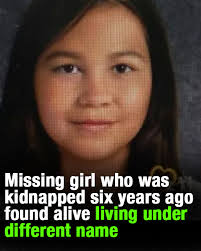
At first, the search was urgent and relentless. Police canvassed neighborhoods, volunteers handed out flyers, and news stations broadcast Karen’s smiling photo across screens. Her family waited by the phone, hoping every ring would bring the news they longed for.
But over time, the search grew quieter. Tips became scarce, headlines disappeared, and Karen’s story slipped from public attention. Her case moved from urgent alerts to a cold file in a quiet office.
For most people, the story faded. But for her family, the silence never did.
The Day Karen Vanished
Karen was just five years old when she disappeared. On an ordinary afternoon, while her family prepared dinner, she vanished in a brief moment when no one was watching. There were no clear witnesses, no immediate answers. Neighbors and police searched nearby fields and wooded areas, knocking on doors and hoping for any clue. But the hours, days, and weeks passed without a breakthrough. Eventually, investigators suspected she had been taken.
A Case That Refused to Die
Even as public attention waned, Karen’s case never disappeared. Her photograph remained in national missing children databases, and age-progressed images were created to show how she might look as she grew. Caseworkers revisited the investigation repeatedly, following every tip—even when most led nowhere.
Investigators knew one truth: sometimes answers come years later.
A Tip That Changed Everything
Nearly six years later, a tip arrived that would change the course of the investigation. Someone had noticed a child in another state—2,600 miles away—whose appearance strikingly resembled an age-progressed image of Karen.
What could have been ignored was carefully examined. Slowly, pieces began to align.
A New Name, A New Life
The child identified in the tip was living under a different name, attending school, making friends, and appearing to live a normal life. Authorities coordinated carefully across local, state, and federal levels to verify her identity, always prioritizing the child’s safety and emotional well-being.
When the truth was confirmed, it sent shockwaves through the investigation: the child was indeed Karen—now eleven years old, alive, and thousands of miles from the home where she had vanished.
The Moment Everything Changed
The revelation was not simple. Karen had no memory of her early life and had spent more than half of her life under another identity. To her, the life she had known felt real and normal. Processing the truth would take time.
Reuniting With Her Family
For Karen’s family, the news was almost impossible to believe. For six years, every birthday, every holiday, every day was filled with questions: Was she safe? Was she alive? Would they ever see her again?
The reunion would require patience and care. But one undeniable truth had emerged: Karen was no longer missing. She was coming home.
The People Who Refused to Give Up
Behind the scenes, Karen’s recovery was the result of persistent effort: investigators revisiting cold leads, caseworkers sharing her image through missing child networks, and someone noticing a child who looked familiar and reporting it. Often, these efforts go unnoticed—but in moments like this, they make all the difference.
Why Cases Like This Matter
Karen’s story is rare, but it carries a crucial lesson: missing child cases don’t always end the way people expect. Sometimes, children are found years later thanks to small tips, careful observation, and the tools law enforcement uses—age-progressed photos, databases, and inter-agency cooperation.
Her recovery proves that even long-silent cases can still yield answers.
The Road Ahead
Though Karen is safe, her journey is far from over. Children found after long absences face emotional challenges as they reconnect with family and rebuild their sense of identity. Support from counselors, family, and specialists will be key. Authorities continue to investigate how she was taken and lived under another name for so long—but the most important outcome is clear: Karen is safe.
A Story That Ends With Hope
For six years, Karen’s story lived in uncertainty. Now, at eleven years old, she begins a life she never expected to rediscover. Her story carries a message for investigators, families, and the public: “Missing” does not always mean gone forever.