Is Your Local KFC Missing Its Doors? The Viral Out-Door Secret That is Changing Fast Food Forever

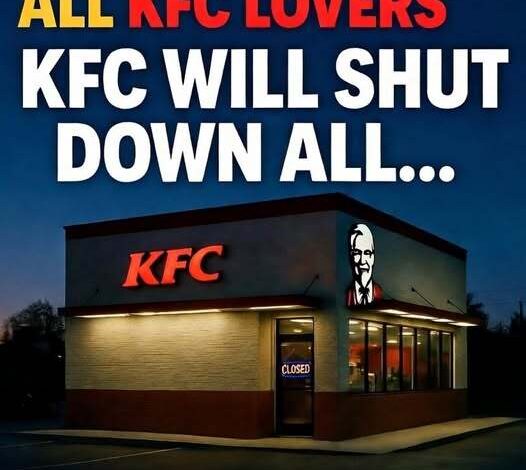
In today’s overcrowded advertising environment—where brands compete through constant notifications, flashing visuals, and endless digital interruptions—KFC has chosen a strikingly different path: communicating through silence. Their “Out-Door” campaign centers on a bold and unconventional idea—removing the doors from their restaurants. What might initially seem like a mistake or oversight is, in fact, a deliberate strategy that transforms the building itself into a powerful message. By eliminating the physical barrier between inside and outside, KFC conveys a clear and immediate concept: the restaurant is always open.
This approach is a standout example of environmental marketing. Instead of relying on traditional advertisements, KFC uses its physical space as the medium. The absence of doors becomes a visual signal that captures attention instantly. In a world saturated with words, images, and noise, an empty doorway is unexpected and universally understood—it suggests accessibility, continuity, and openness without needing explanation. The message is simple yet impactful: no door means no closure.
The campaign extends beyond the restaurants themselves. The removed doors are repurposed as interactive installations placed throughout urban areas. These doors act as creative landmarks, featuring straightforward messaging and QR codes that guide people to nearby KFC locations. Late at night, for example, someone can scan a standalone door in the city and be directed instantly to food—blending physical interaction with digital convenience in a seamless way.
What makes “Out-Door” particularly effective is its reliance on subtraction rather than addition. While many brands attempt to stand out by increasing volume and visibility, KFC achieves distinction by removing something essential. This creates a “pattern interrupt”—a moment of surprise that compels people to stop, notice, and think. It’s a subtle yet powerful form of engagement that feels intentional rather than overwhelming.
The campaign also reflects modern lifestyles, where services operate continuously and consumers expect round-the-clock availability. A restaurant without doors visually reinforces this idea, aligning the brand with a culture that values convenience and constant access. It suggests that KFC is always ready, whether it’s late at night or early in the morning.
Ultimately, “Out-Door” demonstrates that impactful innovation doesn’t always require advanced technology or large-scale production. Sometimes, rethinking a familiar element can create a stronger impression than adding something new. By removing a literal barrier, KFC builds a symbolic connection with its audience—one that communicates reliability, accessibility, and trust. In doing so, the brand promotes not just its food, but the reassuring idea that it is always there when needed.