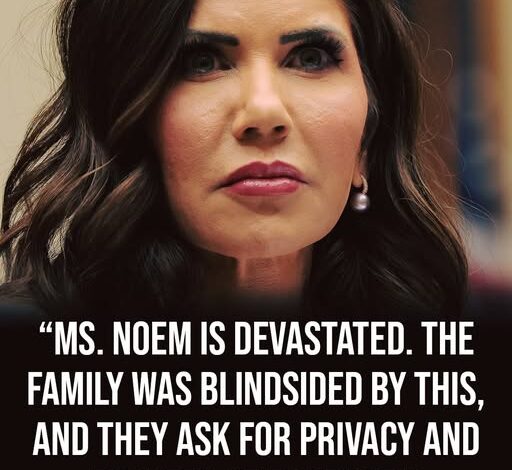
The Noem family, once widely seen as a symbol of traditional values and enduring partnership, now finds itself at the center of intense public scrutiny. What was once a private matter has been thrust into the global spotlight, with deeply personal struggles unfolding under constant attention and analysis.
The allegations involving Bryon have collided sharply with Kristi Noem’s past role in national security, transforming what might have remained a personal crisis into a broader conversation about leadership, judgment, and vulnerability. For someone who once operated within high-level government circles, the situation raises complex questions—not just about personal conduct, but about how private matters can intersect with positions of public responsibility.
Experts in intelligence and security have long warned that undisclosed personal issues can create potential risks. Even something that begins as a private matter can become a point of pressure when exposed, particularly for individuals connected to sensitive roles. In such environments, trust and transparency are not just ideals—they are essential safeguards. When those elements are called into question, the consequences can extend far beyond the individuals directly involved.
Yet beyond the political and professional implications lies a much more human story.
At the center of it all is a family—three adult children and a marriage that began in youth, built over decades, now facing an unexpected and deeply painful test. What was once a shared life shaped by familiarity and routine is now overshadowed by public attention, speculation, and difficult questions that may never have clear answers.
The emotional weight of such a situation is often overlooked. While headlines focus on controversy and analysis, the reality behind them includes feelings of betrayal, confusion, and the challenge of navigating deeply personal issues in front of an audience. For those involved, the experience is not just about public perception—it is about confronting uncertainty within their own relationships.
As the story continues to unfold, it may be interpreted in different ways. Some may view it as a cautionary example of how personal vulnerabilities can intersect with positions of influence. Others may see it as a story of resilience or the possibility of rebuilding after crisis. And for many, it may simply become another headline in an ongoing cycle of public attention.
But regardless of how it is ultimately framed, one truth remains clear:
The boundary between public responsibility and private life is far more fragile than it seems. And when that boundary breaks, the impact can be both deeply personal and widely visible in ways few are ever truly prepared for.