Antoine Forest identified as one of the Air Canada pilots killed in LaGuardia plane crash

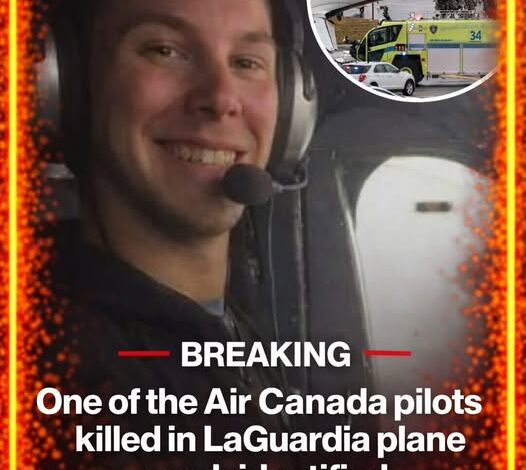
He grew up in Coteau-du-Lac, the kind of kid who didn’t just dream about flying—he studied it, chased it, and built his life around it. Summers were spent watching the sky, learning patterns, imagining routes. Winters were for discipline, pushing through language requirements, studying aviation manuals, doing whatever it took to meet the standards of a profession that demanded precision. Those who knew him remember a teenager who climbed into a cockpit at 16 for the first time and never looked back. From that moment on, every hour logged, every course completed, every certification earned was another step toward something he refused to give up on.
By December 2022, that persistence had paid off. He became a first officer with Jazz Aviation, flying under Air Canada Express. It wasn’t just a job—it was the realization of a goal he had been building toward for years, piece by piece. He had done it the hard way, through effort, patience, and an unwavering belief that he belonged in the sky.
Then, on a Sunday night at LaGuardia Airport, that dream ended in seconds.
As his aircraft approached the runway, a fire truck operated by Port Authority responders was cleared to cross the same strip of pavement. Two paths—both authorized, both routine in isolation—intersected at exactly the wrong moment. The collision that followed happened at relatively low speed, yet it was catastrophic where it mattered most. In the cockpit, two young pilots at the beginning of their careers lost their lives. Behind them, more than 70 passengers survived, many with only minor injuries, spared by a margin that feels both miraculous and unsettling.
Officials have called it a “profound tragedy,” a phrase that captures the scale but not the intimacy of the loss. For investigators, it is a matter of procedures, clearances, and timing—how a system built on layers of redundancy allowed two authorized movements to collide. For the public, it raises questions about communication, coordination, and the fragile margin for error in aviation.
But for his family, the meaning is far simpler—and far more painful.
It is the loss of a son, a relative, a young man who spent years working toward something he loved, only to have it taken away in an instant. It is the collapse of a future that had just begun to unfold. And it is the knowledge that this was not fate in the abstract, but a moment shaped by human systems—by decisions, signals, and timing that failed when they mattered most.
What remains is not just the story of an accident, but of a life defined by purpose and effort, cut short at the very point it began to take flight.