Donald Trump’s Surprise Remark About Karoline Leavitt Sparks Widespread Attention After He Jokingly Calls His Own Press Secretary “Terrible” During Oval Office Press Conference While Criticizing Media Coverage And Reigniting Debate About His Longstanding Tensions With News Organizations And Public Messaging Strategy

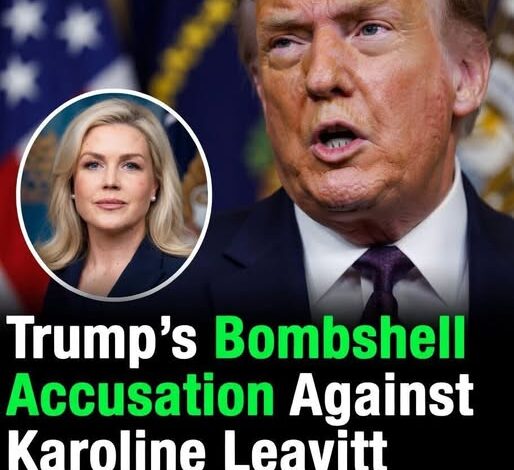
It really depends on how you interpret both the tone and the context—and with Trump, that line is often blurry by design.
On one hand, it fits a long-established pattern. Trump frequently uses humor, exaggeration, and off-the-cuff remarks as part of his communication style. Supporters tend to see moments like this as casual banter—an example of him not being overly scripted or formal, even with his own team. In that light, the quick pivot—criticizing Leavitt and then immediately saying he’d “keep her”—reads as a joke meant to deflect tension around media criticism rather than a serious evaluation of her performance.
On the other hand, critics focus less on intent and more on impact. Even if it was meant humorously, publicly calling a key staff member “terrible” in front of reporters can create mixed signals. The press secretary’s role depends heavily on credibility and authority, and moments like this can complicate that—especially in a media environment where every word is amplified and dissected. From that perspective, it’s less about the joke itself and more about what it suggests regarding internal dynamics and professionalism.
There’s also a broader layer here: Trump’s relationship with the media. The comment didn’t happen in isolation—it came during a discussion about negative coverage. So it can also be read as a rhetorical move, redirecting frustration outward while injecting humor to keep control of the narrative. In that sense, the remark becomes part of a larger strategy of framing media criticism while maintaining attention.
What makes it interesting is that both interpretations can coexist. It can be lighthearted and consequential at the same time. That’s often the nature of political communication today—especially in high-visibility roles—where tone, perception, and context all matter as much as the words themselves.
So whether it feels like harmless humor or something more significant usually says as much about the viewer’s perspective as it does about the remark itself.