My Daughter’s $140,000 Hospital Bill Was Paid by a Stranger — Four Years Later, He Found Me and Said, “I Owed You This”

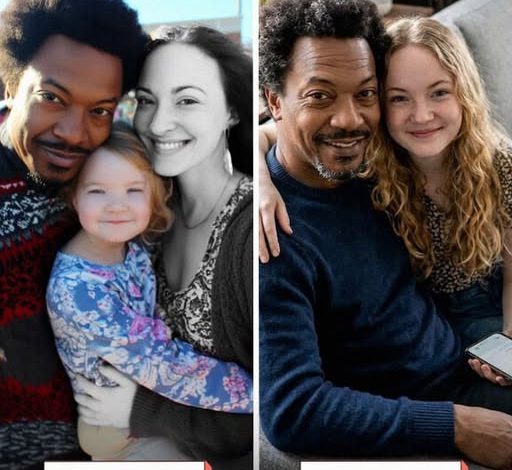
Four years ago, someone I had never met paid $140,000 in full for my daughter’s life-saving surgery—and then disappeared without leaving a trace. Last week, that same man tracked me down in a park and shared the reason behind his actions. What he revealed stirred a memory I had completely forgotten—and changed everything I thought I knew.
My husband died of cancer when our daughter Jenny was just four years old.
Two years later, the heart condition doctors had been monitoring since her birth suddenly became critical.
Jenny was seven when she collapsed at school during recess. By the time she arrived at the hospital, the doctors were speaking urgently, and my chest felt like it would collapse.
“This can’t wait,” one doctor said.
“She needs surgery immediately.”
The cost was staggering—$140,000.
Our insurance denied the claim three times.
The final denial arrived in the middle of the night. I sat at our kitchen table, under the dim yellow light, reading the letter. I felt utterly powerless.
It was surreal that a number on a piece of paper could outweigh my daughter’s life. That a denial code could matter more than the rhythm of her heartbeat.
The next morning, I called a realtor. I decided to sell our house—the only valuable thing I had left. I told myself that as long as Jenny survived, we would find a way to manage everything else later.
That afternoon, I went to the hospital to arrange the first payment.
The billing clerk entered my information, then froze. She looked at the screen, confused, and then turned it toward me.
“Ma’am… your balance has already been paid.”
I blinked.
“That’s not possible,” I whispered. “I haven’t paid anything.”
She pointed at the screen.
“An anonymous donor covered the full amount earlier this morning.”
My knees felt weak.
“Do you know who it was?” I asked.
She shook her head.
“They didn’t leave a name.”
Jenny had the surgery the next day. It saved her life.
For years, I wondered who that person could have been—maybe a wealthy philanthropist, a charitable foundation, or someone who had endured a similar loss and wanted to help another family.
But the truth was far simpler—and far more remarkable.
Last week, I was sitting on a bench in a small park near Jenny’s school while she swung back and forth. A man approached slowly, hesitating.
“Excuse me,” he said. “Are you Jenny’s mother?”
I nodded.
“Yes,” he continued. “I was hoping I’d find you here.”
Something about him seemed familiar, but I couldn’t place him.
“Do I know you?” I asked.
He shook his head slightly.
“Not exactly.”
Then he sat beside me.
“I’m the one who paid for your daughter’s surgery,” he said.
My heart skipped a beat.
“You…?” I stammered.
He nodded.
“But the reason I did it,” he said softly, “is because years ago… you helped me.”
I frowned.
“I don’t remember meeting you,” I admitted.
“That’s okay,” he said. “You probably wouldn’t.”
He looked down for a moment before continuing.
“Eight years ago, I was homeless. I had lost my job, my home—everything.”
I listened silently.
“One day, I collapsed outside a grocery store. People walked past like I didn’t exist.”
He paused.
“Except for one person.”
A strange, familiar feeling stirred inside me.
“A woman stopped,” he said. “She bought me some food, gave me a little money, and said something I’ve never forgotten.”
“What did she say?” I asked quietly.
He smiled.
“She said, ‘Everyone deserves one moment of kindness when life feels impossible.’”
My breath caught.
In that instant, I remembered. Years earlier, before everything had fallen apart, I had stopped to help a man sitting outside a store. I had given him a sandwich and a few dollars. It had felt like such a small gesture, and I had completely forgotten it.
“You helped me when I had nothing,” he said. “That moment gave me hope. It pushed me to rebuild my life.”
He glanced at Jenny, laughing on the swings.
“A few years later, I started a business. Things turned out better than I ever imagined.”
Then he looked back at me.
“And when I saw your daughter in the hospital… I recognized your name.”
Tears filled my eyes.
“So you paid for everything,” I whispered.
He nodded.
“I told you… I owed you.”
I sat there, overwhelmed.
For years, I had wondered why a stranger would do something so extraordinary.
The answer was simple: kindness.
Sometimes the smallest things we do—moments we barely remember—can mean everything to someone else. And sometimes, those moments find their way back to us in ways we could never have imagined.