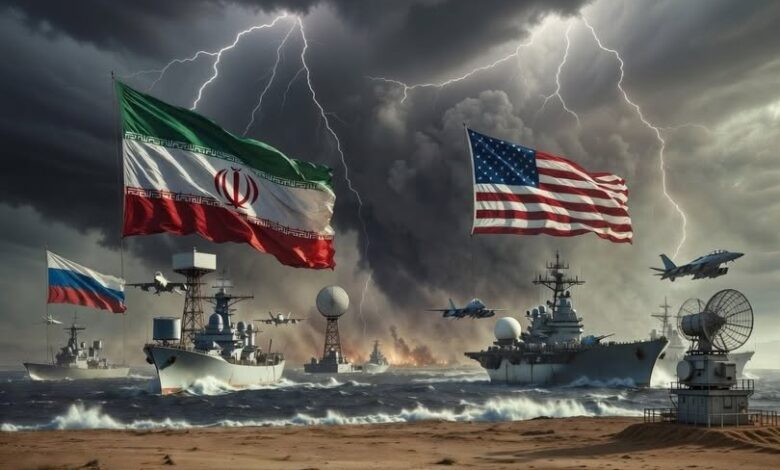
Tensions in the Middle East have intensified following reports from senior U.S. officials claiming that Russia is sharing sensitive intelligence with Iran about the locations and movements of American military forces in the region. According to sources within the U.S. defense and intelligence community, the information being transferred includes detailed data on the positioning of American naval vessels, aircraft carriers, and radar systems. If confirmed, this cooperation would represent a significant development in the evolving strategic relationship between Moscow and Tehran.
Officials familiar with the reports say the intelligence being provided is highly precise, potentially including near–real-time information on U.S. naval deployments and flight operations. Such data could dramatically improve Iran’s ability to monitor American activities across the region. By gaining access to Russian satellite surveillance and signals intelligence, Iranian forces could strengthen their operational awareness and reduce the uncertainty that previously limited their ability to track U.S. military assets.
Analysts believe that this level of collaboration signals a deeper alignment between Russia and Iran in confronting U.S. influence. Although Moscow has not publicly acknowledged any intelligence-sharing arrangement and continues to deny involvement in direct conflict with American forces in the region, Washington views the alleged cooperation as a form of indirect confrontation. By providing strategic information rather than deploying troops, Russia may be able to challenge U.S. operations while maintaining a degree of diplomatic distance.
For American commanders, the implications are serious. If adversaries possess accurate information about U.S. ship positions or flight paths, it could increase the risk to personnel operating in contested areas. Military planners may be forced to adopt new strategies, including more frequent repositioning of naval units, expanded use of electronic countermeasures, and additional efforts to disguise operational movements. The situation raises concerns that even a limited confrontation could escalate quickly if intelligence shared by a third party leads to an attack or miscalculation.
Interestingly, U.S. officials have drawn a distinction between Russia’s alleged actions and China’s current posture toward Iran. While Beijing maintains strong economic and diplomatic ties with Tehran, there is no indication that China is providing similar military intelligence support. Analysts suggest that China’s interests in the region—particularly its reliance on Middle Eastern energy supplies and trade routes—may encourage a more cautious approach that avoids actions likely to destabilize the region.
In Washington, policymakers are evaluating possible responses to the reported intelligence sharing. Potential options include expanding sanctions against Russian and Iranian organizations involved in the activity or publicly exposing evidence of cooperation in order to increase diplomatic pressure on Moscow. Some lawmakers have also called for investments in advanced counter-surveillance technologies designed to prevent adversaries from tracking U.S. forces.
The situation is also being closely monitored by American allies throughout the Middle East, especially Gulf states that rely on U.S. security partnerships. Regional leaders are watching for signals about how firmly Washington intends to respond. A perception that U.S. forces are vulnerable to outside surveillance could influence strategic calculations among both allies and adversaries.
Meanwhile, U.S. intelligence agencies are working to determine how the alleged data transfers are taking place. Investigators are examining whether the information is being passed through official military channels, covert communications networks, or cyber-based systems. Identifying the mechanism behind the intelligence sharing could help American cyber and defense teams disrupt or counter the flow of information.
Modern conflicts increasingly revolve around data as much as weapons. Satellite imagery, digital tracking, and signals intelligence can shape battlefield decisions before any missiles are launched. If Russia is indeed providing Iran with detailed surveillance data, it underscores how information itself has become a powerful strategic tool in global competition.
As 2026 continues, the situation remains fluid. U.S. officials are weighing diplomatic, technological, and military responses while attempting to prevent further escalation. The challenge now facing policymakers is to maintain deterrence while avoiding actions that could spark a wider confrontation among major powers.
Ultimately, the episode highlights how geopolitical rivalries are increasingly playing out through indirect partnerships and information sharing. In a world where intelligence can be as influential as firepower, controlling and protecting strategic information has become a central pillar of national security.