We often talk about a colonoscopy as if it’s something to fear or endure—a necessary inconvenience at best, a dreaded ordeal at worst. But that framing misses what it truly represents. At its core, a colonoscopy is an act of protection, one of the few medical screenings that can not only detect a problem early but actually prevent it from ever becoming one. While patients may focus on the awkwardness or anticipation, doctors are thinking about something far more serious: the cancers that develop quietly, without pain, without symptoms, and without warning until it’s much harder to treat.
Colon cancer is especially insidious because it can grow for years unnoticed. Small polyps—often harmless at first—can slowly change over time. Without screening, there’s no clear signal that anything is wrong. That’s what makes a colonoscopy so powerful. It allows physicians to see directly inside the colon and, if needed, remove those polyps immediately. In many cases, what could have become a life-threatening disease is stopped before it even begins. It’s not just early detection—it’s early intervention.
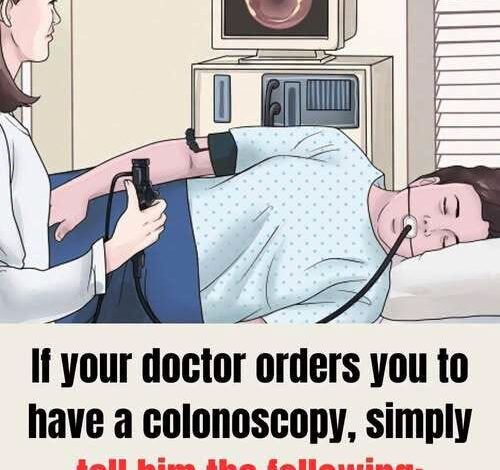
Despite this, hesitation is common, and it’s understandable. The idea of the procedure can feel invasive, and the unknown tends to amplify fear. But the reality is far less intimidating than most people expect. On the day of the exam, patients are typically given sedation that allows them to sleep or remain deeply relaxed. Many remember little to nothing of the procedure itself. It’s usually brief, carefully monitored, and performed by a team whose entire focus is your safety and comfort.
Ironically, what most people find challenging isn’t the colonoscopy—it’s the preparation the day before. Drinking the solution that clears the digestive system can be inconvenient and, at times, unpleasant. But even this part has improved over the years, with better-tasting options and more flexible instructions. And importantly, it’s temporary. Within a day, it’s over. The procedure itself then becomes the easiest part—something that happens quickly and quietly while you rest.
What often goes unspoken is the cost of delay. Postponing a colonoscopy out of fear or discomfort doesn’t make the underlying risk disappear—it simply allows time for potential problems to grow. Polyps that could have been removed early may continue developing unnoticed. By the time symptoms appear, the situation can be far more complex. That’s why doctors emphasize timing and routine screening, especially as people reach recommended screening ages or have additional risk factors.
Changing how we think about a colonoscopy can make a meaningful difference. Instead of viewing it as something being done to you, it becomes something you’re choosing for yourself. It’s a proactive step, a way of taking control rather than reacting later under more difficult circumstances. Asking questions, understanding the process, and knowing what to expect can replace anxiety with clarity. Even small things—talking to others who’ve had the procedure, learning about sedation options, or discussing concerns openly with a doctor—can make the experience feel far more manageable.
There’s also a deeper sense of reassurance that comes afterward. A normal result can bring real peace of mind, sometimes for years. And if something is found, it’s often at a stage where it can be handled quickly and effectively. Either outcome moves you forward with more certainty than before.
In the end, a colonoscopy isn’t defined by the brief inconvenience it may bring. It’s defined by what it helps you avoid. It’s a single step that can reduce risk, extend health, and provide clarity about your future. Seen in that light, it shifts from something to dread into something quietly powerful—a decision that may take a day, but can influence decades.