This legendary actress made a rare public appearance at 90 – fans say she still looks “beautiful”

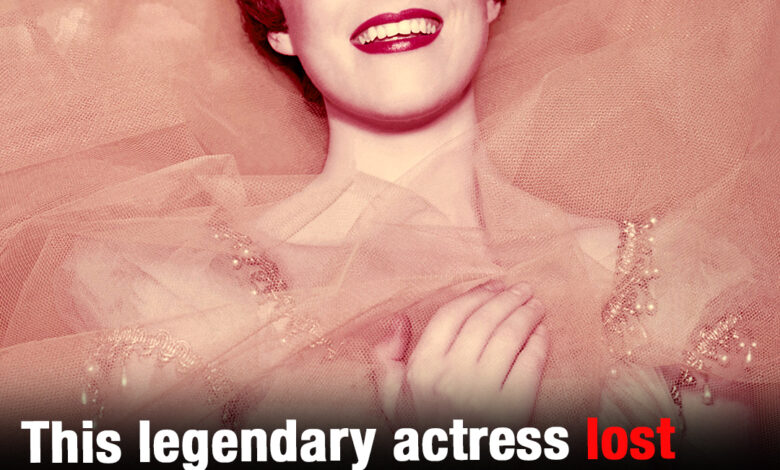
Julie Andrews’ quiet reappearance at the World Parkinson’s Congress was not simply a moment of nostalgia.
It was a moment of courage.
Speaking from her home, softly lit and dressed with simple elegance, she did not use the occasion to lean heavily on her own legend. She did not arrive as the untouchable icon preserved forever in the glow of old films, red carpets, and standing ovations. Instead, she appeared as something more intimate and, in many ways, more moving:
a woman who understands what it means for the body to betray something precious.
At 90, Andrews spoke with a tenderness that seemed to reach far beyond the screen. Addressing those gathered in the fight against Parkinson’s disease, she acknowledged the devastation serious illness can bring. Her words carried the quiet authority of someone who has lived long enough to know that suffering is not abstract. It enters homes. It changes routines. It alters voices, movements, futures, and identities.
When she urged attendees to become “a beacon of light” in the search for a cure, the message felt deeply personal.
It was not merely ceremonial encouragement.
It was empathy.
For decades, Julie Andrews represented a kind of radiant perfection to audiences around the world. Her voice seemed almost impossible in its clarity and range. Her presence carried elegance without coldness, discipline without harshness, and sweetness without weakness. In films like Mary Poppins and The Sound of Music, she became part of childhood memory for millions — not just as a performer, but as a symbol of comfort, order, hope, and song.
She belonged to that rare category of artists whose work becomes woven into family life.
Children heard her voice before they understood fame. Parents played her films like rituals. Grandparents remembered seeing her when the world itself felt younger. For many people, Julie Andrews was not simply admired.
She was loved.
That is why seeing her again, older now but still luminous, stirred such an emotional response.
The reaction online was immediate. Fans called her a “living legend,” but the phrase carried more than admiration. It carried relief. Gratitude. A sense that someone precious had returned briefly into view and reminded people that grace can survive time.
Many remarked on her beauty, but not in the shallow way celebrity culture often discusses aging. What moved people was not youth preserved, but dignity deepened. Her beauty now seemed to come from resilience, from softness without fragility, from the calm of someone who has endured loss and still chosen purpose.
That response was especially powerful because audiences know part of what she has survived.
Julie Andrews’ golden voice — the voice that once seemed limitless, soaring across four octaves with astonishing control — was damaged after a surgery that changed the course of her life. For an artist whose identity had been so deeply connected to singing, the loss was devastating. It was not only a professional injury. It was personal, almost existential.
For most performers, losing such a voice might have felt like losing the self.
And in some ways, it was a kind of grief.
The world mourned the sound.
She had to live with the silence.
Yet Andrews did not allow that loss to become the end of her creative life. Slowly, and with remarkable discipline, she reshaped her path. She continued acting. She turned more fully toward writing. She narrated, collaborated, appeared, encouraged, and remained present in the arts even after the gift that first made her internationally beloved had been taken from her.
That is why her message at the Parkinson’s Congress resonated so deeply.
She knows something about losing what once felt inseparable from identity.
She knows that illness, injury, and physical limitation do not only affect the body. They challenge the story a person has told about who they are. They force people to ask painful questions:
What remains when one ability changes?
What is left when the old way of moving through the world is no longer possible?
Can purpose survive after loss?
Can beauty remain after the thing everyone loved most has been altered?
Julie Andrews’ life has answered those questions quietly for years.
Yes.
Not easily.
Not without grief.
Not without adaptation.
But yes.
That is what made her appearance feel like such a gift. She was not presenting false cheerfulness or polished denial. She was offering something steadier: the example of a person who has suffered a profound loss and still found ways to remain useful, creative, dignified, and generous.
For people living with Parkinson’s disease, and for the families who walk beside them, that kind of message matters. Serious illness can narrow the world. It can make the future feel uncertain and the body feel unfamiliar. It can create frustration, dependence, fear, and exhaustion. It can make people feel as though they are disappearing from the lives they once recognized.
To hear Julie Andrews speak of light in that context was not sentimental.
It was brave.
Because light, in the face of illness, does not mean pretending darkness is absent. It means choosing to keep searching anyway. It means continuing research, care, advocacy, patience, and hope even when progress feels painfully slow.
Her words reminded listeners that medical battles are never fought only in laboratories or hospital rooms. They are fought in families, in communities, in fundraising halls, in therapy sessions, in quiet mornings when someone tries again, and in the persistence of people who refuse to let disease have the final word.
Andrews’ presence also carried a symbolic weight that only time can create.
Here was a woman once known for one of the most beautiful voices in entertainment history, now using a different kind of voice — gentler, aged, altered by life — to encourage others facing their own physical struggles. That transformation made the moment more powerful, not less.
The voice may no longer be what it once was.
But the spirit behind it remains unmistakable.
That is what fans seemed to recognize instantly.
They were not merely seeing Julie Andrews the star. They were seeing Julie Andrews the survivor. The artist who endured public loss with private strength. The woman who did not vanish when one chapter closed. The figure who continues to remind people that a life’s meaning cannot be reduced to a single gift, no matter how magnificent that gift once was.
Her reappearance invited a different kind of admiration.
Not the awe of perfection.
The reverence for endurance.
There is something profoundly moving about watching beloved artists age because they carry pieces of our own histories with them. Their faces remind us of childhood afternoons, family movie nights, first songs memorized, and emotions we may not have known how to name at the time. When they grow older, we are forced to recognize that time has been moving through us as well.
But Julie Andrews has always made aging look less like disappearance and more like distillation.
The glamour has softened.
The voice has changed.
The public appearances are rarer.
Yet what remains feels essential: kindness, composure, intelligence, humor, and an almost luminous steadiness.
At the World Parkinson’s Congress, she did not need a stage musical or a film set to command emotion. She did not need orchestration, costume, or applause. The power came from simplicity — from a beloved figure speaking honestly about suffering and urging others toward hope.
That kind of grace cannot be manufactured.
It is earned.
Through loss.
Through adaptation.
Through continuing when life asks you to become someone different than the person you planned to be.
For many fans, seeing her again felt like being reminded of an old truth they had perhaps forgotten: great talent is breathtaking, but dignity may be even more enduring. A voice can be damaged. A career can change shape. A body can age. Public attention can fade.
But purpose can remain.
Love can remain.
Generosity can remain.
The ability to encourage others can remain.
Julie Andrews’ appearance was brief, but its emotional echo was large. It reminded people that courage does not always announce itself dramatically. Sometimes it appears in soft light, in simple clothing, in a calm voice speaking from home to strangers united by struggle.
At 90, she still carries the grace that once filled theaters and cinemas around the world.
Only now, that grace feels different.
Deeper.
Quieter.
More human.
She is no longer simply the woman with the impossible voice.
She is the woman who lost it and kept living beautifully anyway.
And in that, perhaps, she offers one of her most powerful performances of all — a reminder that even when a great gift is taken, dignity can endure, purpose can continue, and light can still be offered from one wounded life to another.