Tensions between the United States and Cuba have intensified in recent weeks, driven by a mix of forceful political rhetoric, policy decisions, and mounting economic strain on the island—developments that have drawn global scrutiny and raised fresh uncertainty about the future of their relationship.
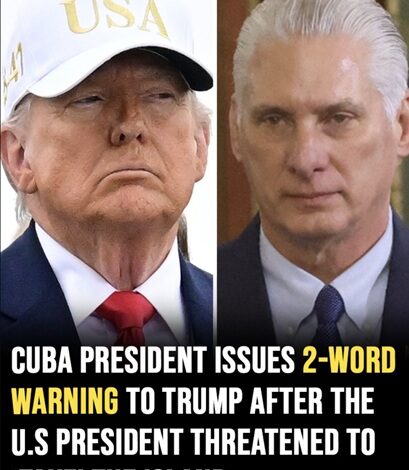
In mid-March 2026, U.S. President Donald J. Trump escalated his language regarding Cuba, suggesting that the United States could exercise sweeping influence over the country and remarking that he would consider it an “honor” to “take Cuba in some form.” He also claimed he believed he could “do anything I want” with respect to the island—comments that quickly sparked concern among diplomats, regional governments, and international observers.
These statements landed at a particularly fragile moment for Cuba, which is currently grappling with a severe economic and energy crisis. Widespread blackouts, fuel shortages, and declining access to basic goods have placed significant pressure on daily life, intensifying public frustration and exposing vulnerabilities in the country’s infrastructure.
The backdrop to this moment is a long and complicated history between Washington and Havana. Since the Cold War, relations have been shaped by ideological rivalry, the enduring U.S. embargo, and shifting policy approaches across administrations. A brief period of rapprochement during the presidency of Barack Obama between 2015 and 2017 eased some restrictions and reopened diplomatic channels. However, those efforts were later reversed, with sanctions tightened and limits reimposed on travel, remittances, and economic cooperation during subsequent administrations, including Trump’s.
In early 2026, U.S. measures that curtailed oil flows from Venezuela to Cuba further strained the island’s already fragile energy system. Because Cuba relies heavily on imported fuel for electricity generation and transportation, disruptions to supply have led to repeated rolling blackouts affecting homes, hospitals, schools, and industry.
International organizations such as the United Nations have warned that prolonged fuel shortages could escalate into a broader humanitarian crisis, particularly in areas like healthcare and essential public services. These internal pressures have, in turn, heightened the political stakes, amplifying tensions between Cuban and U.S. leadership.
Responding to Trump’s remarks, Cuban President Miguel Díaz-Canel issued a firm rebuttal, emphasizing that Cuba would resist any attempt to undermine its sovereignty. Writing on X, he described the Cuban people as possessing “unbreakable resistance” and framed external pressure as a direct challenge to national independence.
Cuban officials have consistently argued that U.S. actions—particularly sanctions and economic restrictions—are intended to destabilize the country’s political system and exert control over its resources. At the same time, they maintain that any meaningful dialogue must be grounded in mutual respect and free from preconditions.
Despite the sharp rhetoric, there have been limited indications of diplomatic engagement. Earlier in March, Díaz-Canel acknowledged that some level of communication had opened between the two governments, suggesting that dialogue remains possible even amid deep mistrust.
Still, decades of strained relations and unresolved grievances continue to shape the current environment. The U.S. embargo, in place for generations, has played a central role in Cuba’s economic limitations, while also reinforcing perceptions among many Cubans of sustained external pressure.
The Trump administration’s renewed approach has included calls for political reform within Cuba, with U.S. officials arguing that the island’s economic difficulties stem from systemic governance issues. Figures such as Marco Rubio have echoed this view, advocating for leadership change and linking Cuba’s internal struggles to its political structure.
Meanwhile, the tightening of sanctions and the disruption of Venezuelan oil shipments have deepened Cuba’s economic contraction. The country faces declining tourism, shortages of food and medicine, and growing migration pressures, all of which contribute to a broader sense of instability.
Critics of U.S. policy argue that such measures disproportionately impact ordinary citizens, worsening humanitarian conditions without necessarily achieving political transformation. Others contend that external pressure has historically failed to produce lasting change in Cuba’s leadership, pointing to decades of resilience within the country’s governing system.
International reactions to the current tensions have been mixed. Russia has expressed support for Cuba, criticizing U.S. actions as aggressive and calling for respect for Cuban sovereignty. China has similarly condemned sanctions, urging adherence to international law and warning against policies that could destabilize the region.
For its part, Cuba continues to signal a willingness to engage diplomatically, while accusing the United States of leveraging economic hardship as a tool of political pressure. The situation is further complicated by internal challenges, including declining GDP, infrastructure strain, and social tensions that are intensified by external dynamics.
Although there is no indication of imminent military conflict, analysts caution that the combination of escalating rhetoric and sustained economic pressure could push relations into a more volatile phase. Public opinion remains divided, both within the United States and internationally, over whether continued pressure will lead to reform or simply deepen suffering.
Ultimately, the current moment reflects the enduring complexity of U.S.–Cuba relations—where history, politics, and economic realities intersect. The path forward will likely depend on a delicate balance between confrontation and diplomacy, as both sides navigate a rapidly evolving geopolitical landscape shaped by longstanding tensions and immediate pressures.