Rome raises legal concerns over recent military action
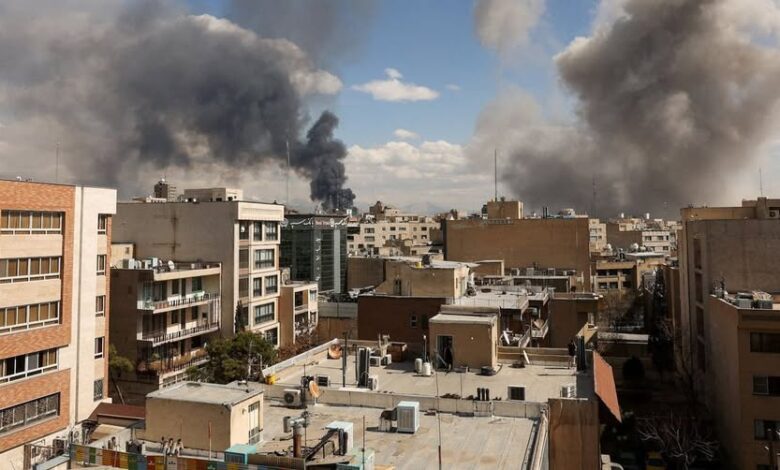
A major diplomatic rift appears to be emerging among Western allies after Italy sharply criticized recent military operations carried out by the United States and Israel against Iran.
Speaking before Italy’s lower house of parliament on March 5, 2026, Defense Minister Guido Crosetto stated that the strikes—which reportedly resulted in the death of Iran’s Supreme Leader, Ayatollah Ali Khamenei—constituted a “clear violation of international law.” His remarks mark one of the strongest public rebukes from a NATO member since the operation triggered escalating tensions across the Middle East.
Crosetto’s comments have drawn widespread attention across European capitals, where leaders are increasingly evaluating the broader implications of the rapidly expanding conflict.
A challenge to Western unity
Italy’s position represents a notable shift in tone within the Western alliance. Since Donald Trump returned to the U.S. presidency in 2025, Italian Prime Minister Giorgia Meloni’s government had worked to strengthen its political and strategic alignment with Washington.
However, the scale of the recent military action and the speed with which it unfolded appear to have unsettled Rome’s leadership.
Addressing lawmakers in parliament, Crosetto argued that the targeted strike against Iran’s leadership fell “outside the framework of international legal norms.” His statement reflects growing concern in parts of Europe that key allies were not adequately consulted before the operation was launched.
Complaints over lack of consultation
One of the central issues raised by the Italian government involves the apparent absence of advance coordination with European partners.
According to Crosetto, the United States and Israel carried out a “broad wave” of military strikes without informing allied governments in the Mediterranean region or within NATO structures. That lack of communication has left many European nations scrambling to respond to the conflict’s humanitarian and economic consequences.
“It is a war that began without the rest of the world being informed,” Crosetto told lawmakers.
His remarks echoed concerns that have quietly surfaced in other European capitals, including Paris and Berlin, where officials have also questioned the degree of consultation prior to the strikes.
Debate over international law
The legal justification for the military operation has quickly become a central point of international debate.
U.S. officials have framed the strikes as an act of preventative self-defense, arguing that the action was necessary to stop Iran from advancing toward nuclear capability.
However, some international legal experts and diplomats argue that such actions require evidence of an imminent threat in order to meet the standards defined under international law. Without publicly available evidence demonstrating such immediacy, critics contend the legality of the operation remains uncertain.
By openly describing the strikes as unlawful, Italy has placed itself at the forefront of this legal and diplomatic debate.
Italy balancing criticism with security commitments
Despite its criticism of the operation, Italy remains deeply involved in managing the broader regional fallout.
Italian authorities have begun deploying air defense assets to Gulf states, particularly to help protect civilian infrastructure in countries such as Bahrain and the United Arab Emirates that have faced retaliatory attacks from Iran.
In addition, Italian naval units have moved toward the eastern Mediterranean, near Cyprus, to strengthen maritime security and prepare for potential disruptions to shipping routes.
This creates a delicate balancing act for Rome: condemning the legality of the military action while simultaneously contributing to regional stabilization efforts.
Economic concerns add pressure
The conflict’s economic consequences are also weighing heavily on Italian policymakers.
Italy depends significantly on imported energy supplies, making it particularly vulnerable to instability in global oil and gas markets. With tensions rising around the Strait of Hormuz—a critical global shipping route—energy prices have already shown signs of volatility.
Italian officials fear prolonged disruption could further strain an economy already facing sluggish growth.
Crosetto suggested that beyond legal concerns, the conflict could represent a strategic miscalculation with far-reaching consequences for the stability of the Mediterranean region.
A possible shift in Europe’s security approach
The Italian response may also influence a broader discussion within Europe about strategic independence in defense and foreign policy.
If major NATO allies increasingly feel excluded from key security decisions, momentum could grow for a stronger and more autonomous European security framework within the European Union.
For years, the concept of “strategic autonomy” has been debated among EU leaders. The current crisis may intensify those conversations, particularly if tensions between Washington and European capitals continue to rise.
Calls for diplomacy amid escalating tensions
As the conflict intensifies, political leaders across Europe are beginning to call for renewed diplomatic efforts aimed at preventing further escalation.
However, the situation remains volatile. Iranian officials have promised continued retaliation, while U.S. and Israeli leaders have suggested additional military actions may still occur.
For now, Italy’s position stands as one of the most visible expressions of concern within the Western alliance.
A moment of uncertainty for the Atlantic alliance
Whether Italy’s criticism signals a lasting fracture among Western allies or simply reflects domestic political pressure remains unclear.
What is certain is that the conflict has placed significant strain on long-standing alliances and raised difficult questions about how military decisions are made within international partnerships.
As governments across Europe monitor developments closely, the coming days may reveal whether other nations follow Italy’s lead in openly challenging the strategy behind the strikes—or whether the alliance ultimately rallies behind a unified response.