The Silent Ticking Clock: Inside the Heart-Wrenching World of Israel’s High-Stakes Secret Operations

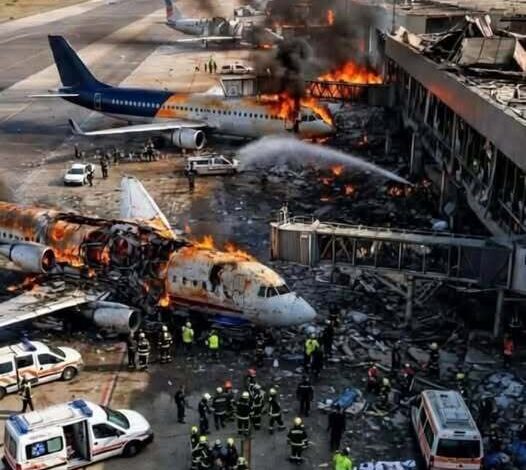
Within the controlled, high-stakes atmosphere of a national security briefing, operations are often reduced to coordinates, objectives, and calculated risks. Yet for those living in Israel and across the wider region, these same events unfold in deeply personal and emotional ways—the quickened pulse of a parent, the unanswered call of a loved one, the heavy silence of a home waiting for news. As reports emerge of another covert operation on April 3, 2026, it becomes clear once again that military action is never just a strategic move on a geopolitical map. It is a profoundly human experience, carried in the fear, uncertainty, and anticipation of those directly affected.
The real weight of war reporting often lies in what happens before confirmation—the uncertain space between action and verified information. In those early moments, before official statements are released or analysts begin interpreting events, communities are left to imagine the worst. Families worry about relatives in uniform, and neighbors share quiet, uneasy glances. Information arrives in fragments: anonymous sources, partial intelligence leaks, and social media posts that spread faster than facts can be confirmed. This cycle has become both familiar and deeply exhausting in a region where tension is a constant.
History shows that patience and restraint are crucial during these periods. Initial reports are often incomplete or misleading, and the reality behind major operations is rarely as straightforward as it first appears. Every mission—whether a targeted strike or a hostage rescue—carries a complex mix of outcomes. The Nuseirat operation in the summer of 2024, for example, brought relief with the rescue of four captives, but also came with significant human cost and conflicting accounts that reflected the complexity of the situation.
The emotional impact of such events extends well beyond their official conclusion. In conflict reporting, the urge to quickly define outcomes can overlook the deeper human consequences. Behind every headline are individuals navigating unseen pressures: intelligence personnel working in secrecy, soldiers operating under intense strain, and families on all sides trying to make sense of events beyond their control. War rarely offers clear endings; instead, it leaves lasting effects that continue long after the news cycle moves on.
What truly defines these moments is not a narrative of immediate victory or loss, but the shared experience of uncertainty. Entire communities find themselves suspended in time, holding their breath as they wait for clarity. In this space, courage is necessary—but so is an honest recognition of the unknown. As more details about this latest operation come to light, the global audience watches with a mixture of hope and concern. Once again, it becomes evident that while a mission may be declared complete, the human story continues to unfold, shaped by the lives that have been permanently changed.