She Left Home for Candy and Never Came Back, What Authorities Found Days Later Shocked an Entire Nation

What began as an ordinary afternoon quickly turned into a tragedy that would shake an entire community—and reach far beyond it.
A young girl, full of energy and known for her bright spirit, stepped out of her home for what should have been a simple, harmless errand. She asked for permission to buy candy from a nearby store—something so routine, so familiar, that it carried no sense of danger. It was the kind of moment families experience every day, without hesitation or fear.
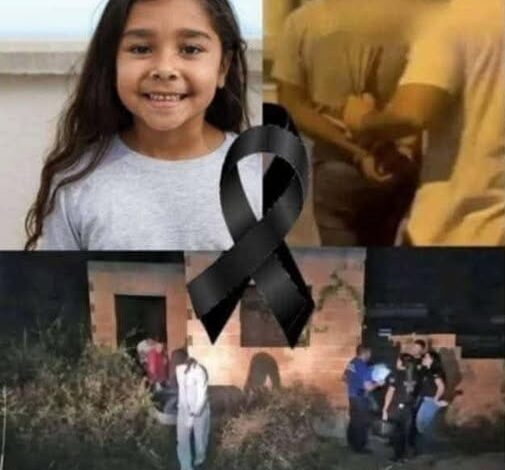
Her name was Perla Alison.
And nothing about that moment suggested it would be the last time her family would see her alive.
At first, there was no panic.
When she didn’t return right away, it was easy to assume she had been delayed—maybe she stopped to talk to someone, maybe she lingered a little longer than expected. But as time passed, that sense of normalcy began to fade. Minutes stretched into hours, and with each passing moment, concern turned into fear.
Her family began searching.
They walked the streets, called out her name, asked neighbors if they had seen her. They retraced every possible step she could have taken, clinging to the hope that she would appear around a corner or walk back through the door.
But she didn’t.
Authorities were soon alerted, and what started as a local search escalated quickly. A nationwide Amber Alert was issued—an urgent signal that a child was missing under circumstances suggesting immediate danger. Her image, her name, and the details of her disappearance spread rapidly across television, social media, and messaging platforms.
Strangers became part of the search.
People who had never met her followed the case, shared her photo, and watched for updates. Volunteers joined in, searching streets, parks, and abandoned areas. Every tip mattered. Every possibility was explored.
For days, hope held on.
But as time passed, something began to shift.
The longer she remained missing, the harder it became to ignore the growing sense of dread. What had started as a race against time slowly became something heavier—something more uncertain, and far more frightening.
Then came the moment no one was prepared for.
It began not with a breakthrough, but with a warning sign—a strong, unsettling odor reported by a resident near an abandoned building. The smell was enough to raise alarm, prompting a call to emergency services.
Authorities arrived near the Constitución de 1917 metro station, not far from where Perla Alison had last been seen. The area—a vacant lot with a deteriorating structure—immediately drew attention.
The scene was secured.
Police and forensic teams entered the building, and what they discovered confirmed the worst fears.
A body.
It was later identified as Perla Alison.
The news spread quickly, replacing hope with grief. What had been a search for a missing child became something irreversible—a loss that could not be undone.
Early reports indicated signs of violence. While full details were not immediately released, authorities confirmed that the case would be investigated as femicide—a classification used in cases involving the gender-based killing of women and girls.
Forensic specialists began their work, conducting examinations to determine the exact cause of death. Initial findings suggested she may have suffered abuse before her death, though officials emphasized that conclusions would be based on verified medical evidence.
Even without all the answers, the impact was immediate.
The same platforms that had been used to search for her were now filled with grief, anger, and calls for justice. People who had followed her story from the beginning struggled to process the outcome.
Communities responded.
Feminist organizations and civil groups raised their voices, demanding accountability—not only for those responsible, but for the broader systems that allow such violence to occur. The case became more than a single tragedy. It became part of a larger conversation about safety, protection, and justice.
In her neighborhood, the loss felt deeply personal.
Familiar streets no longer felt the same. Places where she had once played or walked now carried a sense of absence that could not be ignored. The ordinary had been transformed into something heavy with memory.
For her family, the grief was beyond words.
That final moment—a simple request to buy candy—became something permanent. A memory replayed endlessly, carrying a weight no one should ever have to bear.
Investigators continue their work, following leads, gathering evidence, and building a case. Their goal remains clear: to find those responsible and bring justice.
But even justice cannot restore what has been lost.
Cases like this leave lasting marks—not only on families, but on entire communities. They force difficult questions about safety, awareness, and prevention. They expose vulnerabilities that cannot be ignored.
And they reveal something else, too:
The power of collective attention.
Thousands of people followed her story. They shared her image. They hoped for her return. And when the truth emerged, they refused to remain silent.
That response matters.
Because it ensures her story is not forgotten.
That it continues to be told.
That it pushes for change.
In the end, what happened to Perla Alison is not just a headline.
It is a reminder.
Of how quickly ordinary moments can turn into tragedy.
Of how fragile safety can be.
And of the responsibility we all share—to seek truth, demand accountability, and work toward a world where stories like hers become less common.
Her name will remain.
Not only for how her story ended,
but for the impact it continues to carry forward.