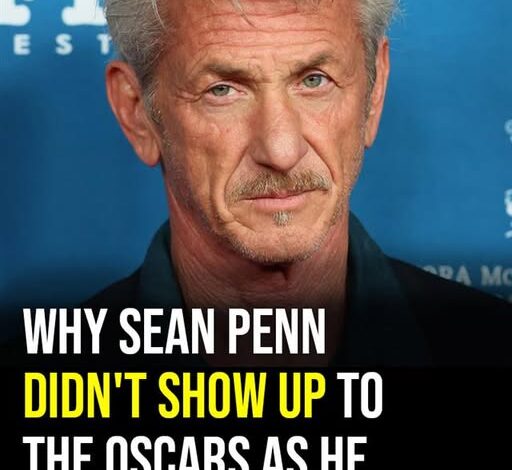
Sean Penn’s absence from the ceremony did not appear to be a coincidence or a scheduling mishap. Instead, it seemed to represent the latest chapter in a long and increasingly public tension between the actor and what the awards themselves symbolize. While many performers spend years striving for recognition from the Academy, Penn has repeatedly questioned the meaning behind the golden statuette, often criticizing the institution and the spectacle surrounding it. Over time, he has described the event less as a pure celebration of artistic excellence and more as a highly produced television show designed for headlines and ratings.
For supporters of Penn’s outspoken approach, his decision not to appear on the very night he secured another historic milestone felt deliberate—almost like a statement in itself. In an industry where acceptance speeches and red-carpet appearances are expected rituals, choosing silence can carry its own message. His absence shifted attention away from the stage lights and toward the larger issues he frequently highlights outside the world of film. Rather than standing before cameras to thank colleagues and studios, Penn allowed the moment to speak indirectly about his long-held skepticism toward Hollywood’s system of validation.
Throughout his career, Penn has shown little hesitation in challenging institutions he believes prioritize image over substance. His criticism of Academy of Motion Picture Arts and Sciences has surfaced in interviews and public remarks for years, where he has questioned whether awards truly reflect artistic courage or simply reward safe choices. That perspective has sometimes placed him at odds with an industry that thrives on prestige and recognition. To many actors, the trophy represents the peak of professional achievement; to Penn, it has often seemed more like a symbol whose importance is defined by perception rather than intrinsic value.
His activism has also played a major role in shaping how he uses his visibility. In recent years, Penn has drawn international attention for his involvement with humanitarian and political causes, particularly his support for Ukraine following the Russian invasion. During that period, he famously brought one of his own Oscars to Volodymyr Zelenskyy as a gesture of solidarity, leaving the statuette in Kyiv with the suggestion that it be returned only when Ukraine had achieved victory. The moment reinforced the idea that, for Penn, the award itself is less important than the platform it provides to amplify issues he considers urgent.
Seen through that lens, skipping the ceremony may have been less about rejecting recognition and more about redirecting the spotlight. The absence drew conversation away from gowns, speeches, and applause and toward the broader themes that have increasingly defined Penn’s public identity. In an environment built around visibility, not appearing can sometimes speak louder than attending.
In the end, the moment underscored a familiar paradox in celebrity culture. Awards are designed to celebrate artistic accomplishment, yet they often become stages for personal expression and political symbolism. By declining to walk that stage, Penn transformed what would normally be a routine acceptance into something more ambiguous and open to interpretation. Without delivering a speech or making a formal statement, he managed to spark a wider conversation about the value of recognition, the responsibilities of fame, and the ways public figures choose to use their influence.