Morgan Freeman’s Brief Social Media Statement on President Donald Trump Sparks Online Debate, Reflecting the Broader Intersection of Celebrity Influence, Political Polarization, and Ongoing Discussions About U.S. Leadership and Global Affairs in 2026

Political debate in the United States remains intense, and in 2026, it extends far beyond Capitol Hill. Public discourse now regularly unfolds across digital platforms, where politicians, journalists, and everyday citizens engage in real-time commentary. Increasingly, prominent figures from entertainment, sports, and music are part of these conversations, lending visibility and emotional weight to national debates. Recently, Academy Award-winning actor Morgan Freeman joined the discourse after posting a brief social media response referencing President Donald Trump, sparking renewed discussion online.
Since returning to the White House in January 2025, Trump has remained a highly polarizing figure. His presidency has produced policy proposals, executive actions, and public statements that have drawn both strong support and sharp criticism. For some, his leadership signals continuity in key political priorities and a firm stance on foreign policy. For others, it raises concerns about domestic divisions and international tensions. Consequently, almost every major development linked to the administration generates widespread discussion.
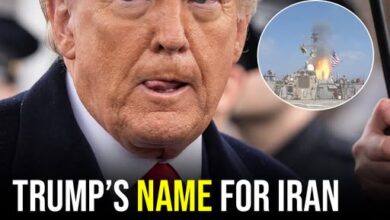
Freeman’s post came amid heightened attention on Iran and global geopolitical concerns. Administration discussions reportedly included potential timelines and strategies regarding Iran’s nuclear program, though officials emphasize that diplomacy remains ongoing. White House Press Secretary Karoline Leavitt noted that negotiations continue and encouraged Iran to reach an agreement. In this fluid environment, Freeman reshared a past statement attributed to Trump that referenced Iran.
Although brief, Freeman’s post quickly drew attention. Social media users debated whether it represented criticism, reflection, or a call for accountability. Supporters of the president questioned the actor’s perspective, while others praised him for engaging in political discourse. The reaction illustrates how even short online statements from prominent figures can ignite significant conversation. In the digital age, celebrities influence debates not only through performances or interviews but also with a single social media post.
Freeman has long participated in public discourse. In 2022, he faced a ban from entering Russia after appearing in a video addressing U.S.-Russia relations. This episode highlighted how entertainers sometimes engage with global issues beyond traditional artistic roles. The intersection of celebrity and politics is not new—actors and musicians have long participated in campaigns, advocacy, and public debates. What has changed is the speed and visibility of these interactions. Social media allows celebrities to speak directly to millions, amplifying engagement but also intensifying polarization.
Freeman’s post did not present an extended policy argument but referenced a prior statement, letting readers interpret it themselves. Yet the response demonstrates the influence of celebrity commentary, particularly when it touches on high-stakes issues like Iran’s nuclear program. Different administrations have employed a mix of sanctions, diplomacy, and public statements to address these concerns, each approach drawing support and opposition. When well-known figures weigh in, their influence can extend beyond traditional audiences, encouraging civic engagement while also raising questions about expertise and nuance.
Freeman’s situation highlights this tension. With decades of acclaimed work and a globally recognized voice, he brings authority and gravitas to his statements. Yet his perspective remains one voice among many in a diverse democratic landscape. Political engagement among entertainers cuts across party lines, reflecting the multiplicity of viewpoints within both Hollywood and the wider population.
The conversation sparked by Freeman’s post underscores how intertwined politics and popular culture have become. News cycles increasingly blend policy developments with celebrity reactions, creating a dynamic where entertainment and governance overlap. While this can amplify awareness, it can also heighten divisions when discussions become personal or adversarial.
In a democracy, public debate is both expected and protected. Citizens—whether private individuals or internationally recognized actors—may express their views. The challenge lies in maintaining constructive dialogue amid rapid digital exchanges. Freeman’s post, while brief, served as a catalyst for conversation. Supporters of the president interpreted it one way; critics, another. The varied reactions reflect a political environment shaped by prior beliefs and affiliations.
As domestic and global tensions continue, similar moments are likely to recur. Public figures will share opinions, news outlets will report on them, and audiences will respond. Freeman’s post illustrates how entertainment and politics intersect and how even a few carefully chosen words from a respected cultural figure can spark a national dialogue. It also underscores the persistent reality of political polarization in the United States.
Ultimately, the significance lies not only in the content of Freeman’s post but in what it reveals about contemporary discourse. In an era of digital communication and instant reaction, a brief statement can resonate widely, shaping debate, awareness, and engagement across the nation.