The geopolitical landscape of the Middle East has long been shaped by tension and rapid change. As the world moves through 2026, many of the developments and confrontations that emerged during 2025 continue to influence global security discussions. Relations between regional powers and Western governments remain under intense scrutiny, often magnified by the speed at which information spreads online and the tendency of modern media cycles to amplify dramatic narratives. Understanding the current climate requires looking beyond headlines and examining the interplay between diplomacy, military strategy, and the psychological effects of perceived threats.
Throughout 2025, Israel encountered a series of complex security challenges that highlighted shifting dynamics across the region. These developments were not isolated events but part of broader changes in the nature of modern conflict. Advances in drone technology, cyber-warfare capabilities, and digital intelligence have transformed how both state and non-state actors engage in confrontation. Threats today may originate not only from conventional military platforms but also from remote networks, software systems, and autonomous technologies. This evolving landscape has forced governments to rethink what national defense means in a world where physical borders are increasingly intertwined with digital ones.
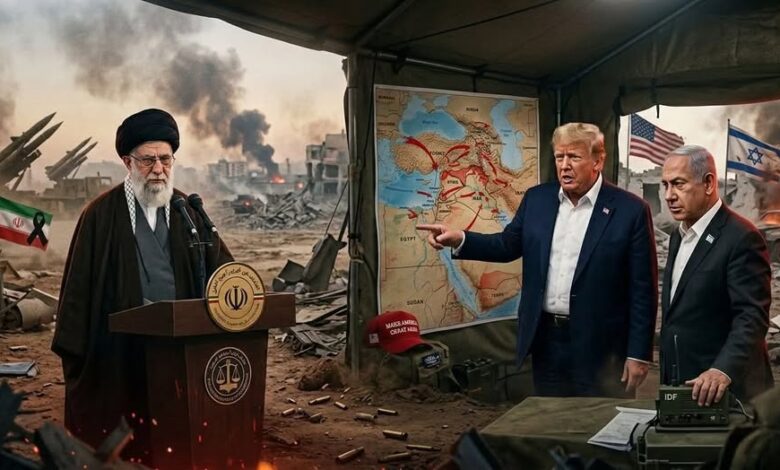
Amid these developments, public discussion about possible escalations involving Iran and the United States has intensified. Headlines sometimes suggest the possibility of immediate or direct conflict, occasionally even implying sudden attacks on American territory. However, such claims often require careful scrutiny. In the digital era, psychological pressure and strategic messaging can be powerful tools. Statements that imply imminent action are frequently part of broader influence campaigns designed to shape perception, provoke reactions, or create uncertainty among audiences far from the region itself.
A more accurate way to understand the situation is through the concept of strategic deterrence. For decades, the United States and Iran have operated within a framework of cautious rivalry that analysts often describe as brinkmanship. Each side signals strength and readiness while attempting to avoid the escalation that would lead to direct large-scale conflict. For Washington, maintaining partnerships and stability in the Middle East is tied to long-standing diplomatic commitments and economic interests. For Tehran, projecting influence across the region is closely linked to national security calculations and resistance to external pressure. Much of the tension between these actors unfolds indirectly through proxy conflicts, cyber activities, and intelligence operations rather than open warfare.
Another defining feature of the current era is the role of misinformation. Over the past several years, digital platforms have accelerated the spread of dramatic or misleading narratives about international events. Headlines labeled “urgent” or “breaking” can circulate widely before reliable information is available, sometimes amplifying fear or confusion. In many cases, deeper analysis reveals that the underlying situation involves heightened alert levels, ongoing negotiations, or strategic signaling rather than immediate military action.
Israel’s security posture during 2025 also reflected a period of rapid technological adaptation. Defensive systems such as Iron Dome and David’s Sling continued evolving to address emerging threats, including increasingly sophisticated missile technologies and coordinated drone attacks. These innovations highlight a broader trend in global defense: modern protection increasingly relies on advanced data analysis, artificial intelligence, and integrated surveillance networks alongside traditional military capabilities.
For the United States, the implications extend beyond foreign policy. Domestic reactions to international crises can shape public discourse and influence political decision-making. When alarming claims circulate widely—especially those suggesting imminent attacks—they can heighten anxiety and polarization within society. In this sense, the most significant “strike” is often psychological rather than physical, targeting public trust and stability rather than geographic territory.
The Middle East itself remains a region shaped by overlapping historical, cultural, and political factors. Israel’s position within this landscape places it at the center of many of the region’s strategic debates. The developments of 2025 did not mark an endpoint but rather a continuation of long-standing tensions that now extend into digital, diplomatic, and technological arenas.
Ultimately, the interactions between Israel, Iran, and the United States resemble a complex strategic contest played on a global stage. While dramatic headlines may suggest sudden or catastrophic shifts, the deeper reality is one of long-term competition, negotiation, and calculated restraint. By examining the structural forces behind these tensions—such as technological change, regional alliances, and evolving security doctrines—it becomes possible to move beyond reactionary fear toward a more informed understanding of global events.
In a world saturated with rapid information, the most effective defense against instability may be a well-informed public capable of distinguishing between speculation and substantiated developments. Careful analysis and thoughtful dialogue remain essential tools for navigating the complicated geopolitical environment of the present era.