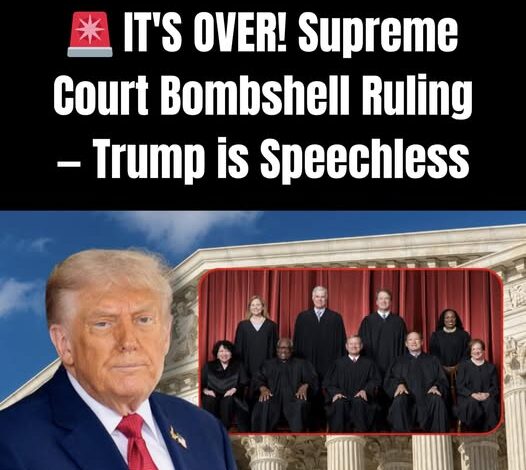
Former President Donald Trump has asked the Supreme Court of the United States to review and overturn a civil verdict that found him liable for sexually abusing and defaming writer E. Jean Carroll. The case has drawn widespread national attention, not only because of the individuals involved, but also due to the broader legal questions it raises about presidential accountability and how evidence is evaluated in high-profile civil trials.
Carroll alleged that Trump assaulted her in a Manhattan department store dressing room in the 1990s and later defamed her when he publicly denied the accusation. In 2023, a jury in New York found Trump liable for battery and defamation, awarding Carroll $5 million in damages. The verdict was later upheld by a federal appeals court in 2024, reinforcing the jury’s findings and prompting Trump’s legal team to escalate the matter to the Supreme Court.
Trump’s attorneys, including lawyer Justin D. Smith, argue that the case lacked key forms of evidence, such as DNA, eyewitness testimony, or a contemporaneous police report. They have characterized Carroll’s claims as politically motivated and are asking the Court to examine whether the trial met appropriate legal standards. Their appeal centers in part on questions about fairness in cases involving public figures and decades-old allegations.
On the other side, Carroll’s supporters and legal advocates view the verdict as a significant moment for survivors of sexual misconduct. Civil rights attorney Areva Martin publicly praised Carroll, emphasizing the difficulty of pursuing such claims against a powerful figure and highlighting the outcome as an example of accountability through the civil justice system.
Carroll herself has reflected on the trial process, suggesting that Trump’s decision not to testify may have influenced the outcome. In a public discussion, she noted that some jurors came from areas more politically favorable to Trump and speculated that his presence in court might have persuaded at least one juror. In her view, that could have led to a hung jury rather than a unanimous verdict.
At this stage, the Supreme Court has not decided whether it will take up the case. If the justices decline to hear the appeal, the lower court’s ruling—and the financial penalties imposed—will remain in place. If the Court agrees to review it, the case could take on even broader significance, potentially shaping how similar civil claims involving public figures are handled in the future.
Beyond the legal arguments, the case continues to sit at the intersection of law, politics, and public opinion—raising ongoing questions about evidence, credibility, and accountability in some of the most closely watched proceedings in the country.