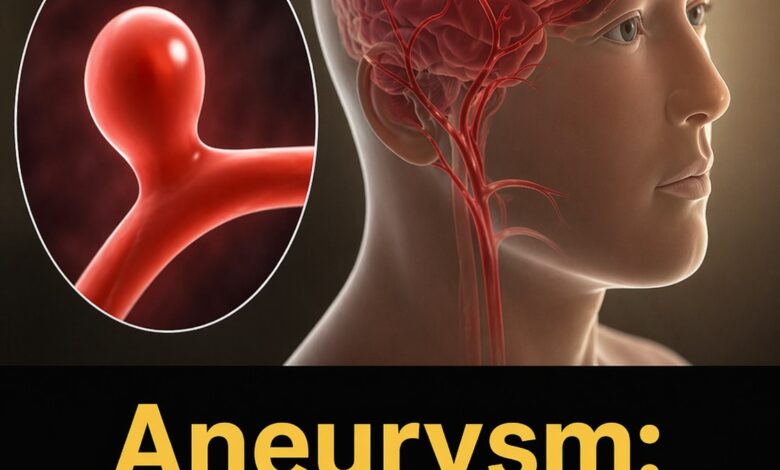
A brain aneurysm rarely announces itself in a clear or gentle way. Most of the time, it develops quietly—no pain, no warning, no outward sign that anything is wrong. Then, in a single moment, that silence can break with overwhelming force. Survivors often describe it the same way: a sudden, explosive headache unlike anything they’ve ever felt before. Not gradual, not building—instant and severe. That phrase, “the worst headache of my life,” isn’t dramatic language. It’s the body sounding an alarm.
When that kind of pain is paired with other symptoms—blurred or double vision, a drooping eyelid, confusion, nausea, sensitivity to light, stiffness in the neck, or weakness on one side of the body—the situation becomes urgent. These are signs that something serious may already be happening inside the brain. In those moments, hesitation can cost precious time. It’s not the time to lie down and hope it passes, or to search for answers online. It’s the time to act immediately, call emergency services, and clearly state what might be happening: a possible brain bleed.
What many people don’t realize is that the body sometimes sends quieter warnings before a rupture ever occurs. These are often called “sentinel headaches”—persistent, unusual headaches that feel different from anything experienced before. They may come and go over days or even weeks, often dismissed as stress, tension, or fatigue. But for some, they are an early signal that the aneurysm is leaking slightly, offering a narrow window where intervention is still possible. Recognizing that something feels “off” and choosing to get checked can make the difference between prevention and crisis.
Certain individuals may carry a higher risk without knowing it. Age plays a role, as does a history of high blood pressure, smoking, or heavy alcohol use. Women are statistically more affected, and prior head injuries or a family history of aneurysms can increase vulnerability. But risk factors don’t guarantee an outcome—and their absence doesn’t guarantee safety. That’s what makes awareness so important. It’s less about predicting who will be affected and more about recognizing when something is wrong.
There’s also a psychological barrier that often gets in the way: the fear of overreacting. People worry about making a scene, about being embarrassed if it turns out to be nothing serious. But in situations like this, overreacting is far safer than waiting too long. Emergency responders would rather assess a false alarm than arrive too late. Acting quickly is not panic—it’s protection.
In the end, awareness isn’t meant to create anxiety. It’s meant to create readiness. It’s about understanding that your body has ways of signaling distress, and that those signals deserve attention. A sudden, severe headache paired with unusual symptoms is not something to ignore or minimize. It’s a moment that calls for immediate action, clear thinking, and the willingness to trust your instincts.
Because when it comes to something as critical as a brain aneurysm, time is not just important—it’s everything.