Before the fame, red carpets, and global recognition, Jada Pinkett Smith grew up in Baltimore, Maryland, in an environment shaped by instability, early hardship, and complex family dynamics that would later inform much of her outlook on life and creativity. Born in 1971, she entered a world where her mother was still a teenager, and the circumstances surrounding her birth placed immediate pressure on her family.
According to accounts she has shared publicly, her grandmother gave her father an ultimatum: marry her mother, allow the child to be adopted, or end the pregnancy. He chose marriage, but the relationship quickly became strained. Not long after, the household was marked by conflict and, as later revealed, instances of domestic violence. Her parents eventually separated, and the instability of those early years became a defining backdrop to her childhood.
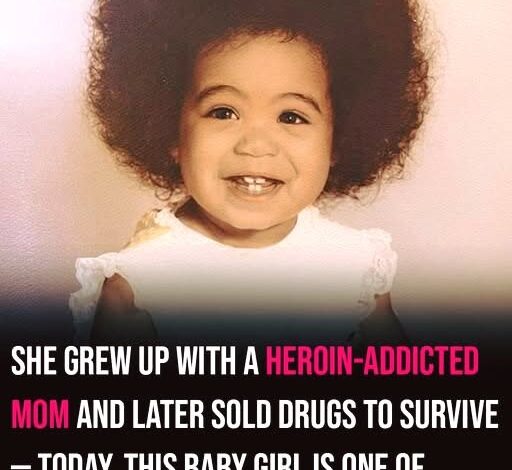
Growing up, Jada often described feeling emotionally unanchored, as both of her parents struggled with substance use and personal challenges. Her mother worked in nursing but also battled heroin addiction, a reality that Jada did not fully understand until she was older. As a child, she noticed inconsistencies in behavior—missed commitments, episodes of exhaustion, and emotional distance—but lacked the context to interpret what was happening.
Her father also struggled with addiction and legal issues, and he was candid with her about his inability to provide consistent guidance or stability. These early admissions, while painful, contributed to a sense of emotional absence that Jada has said shaped her understanding of trust, attachment, and self-worth during her formative years.
A stabilizing presence in her life came from her grandmother, a Jamaican-born social worker who became her primary caregiver for long stretches of time. Her grandmother emphasized discipline, education, and creativity, introducing Jada to the arts and encouraging her to explore music, dance, and performance as constructive outlets. This guidance offered structure in contrast to the instability surrounding her home life.
Despite that support, her adolescence was still marked by exposure to difficult environments. Jada has openly acknowledged that she briefly became involved in illegal activity as a teenager, including drug dealing, a phase she later described as dangerous and misguided. She has said that while this period was short-lived, it gave her a stark understanding of consequences and the limited paths available in certain circumstances.
At the same time, her interest in performance continued to grow. She worked early jobs, including retail and telemarketing, as she sought independence and responsibility at a young age. These experiences reinforced her determination to build a different kind of future, one not defined by the instability she had grown up around.
A pivotal moment came when she attended the Baltimore School for the Arts, where she studied acting, dance, and music. The school provided not only technical training but also a sense of direction and belonging. It was there she formed a close friendship with fellow student Tupac Shakur, a bond often described as deeply supportive and creatively influential for both of them during their formative years.
After graduating, she moved to Los Angeles to pursue acting professionally. The transition was far from easy. Like many aspiring performers, she faced rejection, financial uncertainty, and the challenges of breaking into an industry that is highly competitive and often unforgiving to newcomers without established connections.
Over time, however, she began securing small television and film roles, gradually building experience and visibility. Her breakthrough came with her role on the sitcom A Different World, which provided her with wider recognition and helped establish her as a rising talent in television. From there, her career expanded into film and other creative ventures, allowing her to diversify her work across acting, producing, and later music and entrepreneurship.
Despite professional success, Jada has consistently spoken about how early emotional wounds continued to influence her personal life. She has been open about mental health struggles, including periods of depression and difficulty reconciling childhood experiences with adult responsibilities and fame. Rather than presenting success as a complete resolution of past trauma, she has often emphasized that healing is ongoing and nonlinear.
Her creative path also took unconventional turns. She explored music and later formed the metal band Wicked Wisdom, a project that surprised many but reflected her willingness to challenge expectations and pursue artistic authenticity outside traditional Hollywood boundaries.
Across decades in entertainment, she has moved between acting, producing, music, and hosting, building a multifaceted career while also raising a family and navigating public scrutiny. Alongside her professional life, she has frequently spoken about the importance of honesty, emotional work, and personal accountability, often framing her experiences as part of a larger process of self-discovery rather than a finished narrative.
In recent years, her public presence has also included discussions about relationships, identity, and personal growth, contributing to broader cultural conversations about mental health and vulnerability. While opinions about her life and choices vary widely, her own framing consistently emphasizes resilience, reflection, and evolution over time.
Ultimately, her story is often viewed as one of transformation: a childhood shaped by instability and exposure to hardship evolving into a career defined by persistence, reinvention, and visibility on a global stage. It highlights how early adversity can influence both personal development and creative expression, while also underscoring the complexity of building identity in the public eye.
Today, Jada Pinkett Smith remains an influential figure in entertainment and media, not only for her artistic work but also for her openness about emotional struggles, growth, and the ongoing process of self-definition.