Pulled my beef roast out of the slow cooker and saw these weird white stringy things poking out of the meat. They look like little worms or parasites. Is the meat infested?

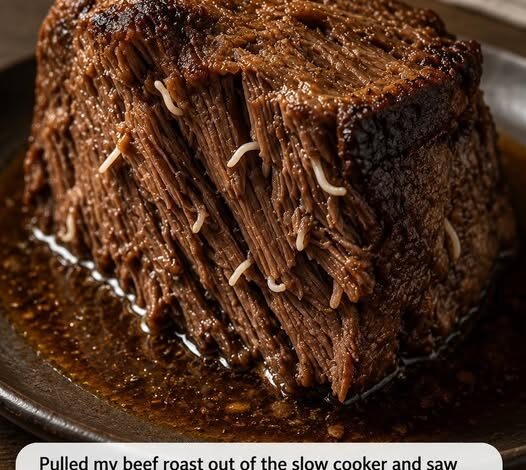
Those pale, stringy pieces that sometimes show up in slow-cooked beef can look unsettling at first glance, especially when they resemble thin white threads running through the meat. It’s an easy jump for the mind to make—many people initially assume parasites—but in almost all cases, what you’re seeing is completely normal and harmless.
Beef cuts used for slow cooking, such as chuck, brisket, short ribs, or round, naturally contain a lot of connective tissue. This tissue is made largely of collagen, a tough structural protein that holds muscle fibers together in life. Because these cuts come from well-used muscles, they need long, slow cooking to break down properly.
When heat is applied over a long period, that collagen gradually softens and transforms into gelatin. This is one of the key processes behind tender, juicy pot roast or shredded beef. As the structure breaks down, parts of that connective tissue can become visible as pale, string-like strands or soft, translucent pieces woven between the fibers of the meat. They might look unusual when you’re pulling the beef apart, but they are simply part of the natural breakdown process.
What’s important is that this transformation is actually desirable. Those same connective tissues that look like “strings” are also responsible for the rich, silky texture and moist mouthfeel of properly slow-cooked beef. Rather than being a defect, they are a sign that the collagen is doing exactly what it should—melting into gelatin and enriching the dish.
True parasites in commercially sold beef are extremely rare, especially in countries with modern food inspection systems like the United States. Even in the rare cases where parasites exist in meat, proper cooking temperatures reliably destroy them. A fully cooked roast that has been stored and prepared correctly is overwhelmingly unlikely to contain anything living or dangerous.
There are also some simple visual differences between normal connective tissue and anything abnormal. Collagen and fat appear irregular, soft, and integrated into the meat structure. They often stretch, shred, or dissolve as you pull the beef apart. Parasites, on the other hand, would not blend into the muscle fibers in this way—they would appear as more uniform, distinct structures rather than part of the grain of the meat.
That said, food safety basics still matter. Beef should always be fresh-smelling before cooking, properly refrigerated, and cooked to a safe internal temperature. If meat smells sour, feels unusually slimy before cooking, or shows clear signs of spoilage, those are legitimate warning signs unrelated to normal connective tissue.
But in the case of properly cooked slow-roasted beef, those white “threads” are not something to fear. They are collagen-rich fibers that have softened under heat and time, turning into gelatin and contributing to the tenderness and flavor people expect from slow-cooked dishes.
So rather than being something harmful, those stringy pieces are actually evidence that the cooking process worked as intended. What looks strange at first is usually just the natural structure of the meat revealing itself during one of the most important transformations in cooking.