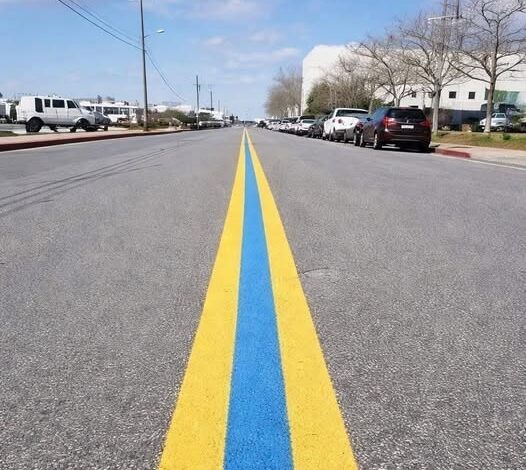
A unique roadway feature has recently begun attracting attention in several parts of the United States, prompting curiosity among drivers and local residents alike. Unlike traditional traffic markings designed solely for safety and navigation, this new addition carries both practical and symbolic significance. The design consists of a thin blue line painted between the standard double yellow center lines found on certain roadways, creating a distinctive visual element that immediately stands out to motorists.
The concept first gained visibility in parts of Maryland, where local officials introduced the marking as a public expression of appreciation for law enforcement officers. The blue line serves as a visible tribute to police personnel who dedicate their careers to maintaining public safety, responding to emergencies, and serving their communities. Supporters of the initiative view it as a simple but meaningful way to acknowledge the important role that officers play in everyday life.
One of the most widely recognized examples can be found in Ocean City. There, the blue line has been painted along 65th Street, a roadway that leads directly to the city’s police department. Local leaders selected the location intentionally, hoping to create a symbolic connection between the community and the officers who work to protect it. By placing the marking on a route frequently traveled by residents and visitors, officials aimed to make the gesture visible to a broad audience while reinforcing the relationship between public institutions and the people they serve.
City representatives have explained that the project is intended to represent both gratitude and recognition. The blue line is designed to honor the commitment, professionalism, and service of law enforcement personnel while also serving as a reminder of the responsibilities they undertake on behalf of the community. For many supporters, the marking reflects respect for individuals who often work under challenging and demanding circumstances.
In addition to its symbolic value, the roadway marking also offers a practical benefit. Because it leads toward the police department, the blue line can function as a subtle navigational aid for drivers seeking the facility. Visitors unfamiliar with the area may find the visual cue helpful when locating the station, particularly during emergencies or when assistance is needed. Officials have described the project as an example of how infrastructure can serve both functional and commemorative purposes at the same time.
The initiative has generated discussion among residents, transportation experts, and local leaders. Supporters argue that incorporating symbols of appreciation into public spaces can strengthen community identity and encourage positive relationships between citizens and public service professionals. They believe that visible acknowledgments of service can help foster civic pride and reinforce a sense of shared responsibility within communities.
Advocates also point out that public servants—including police officers, firefighters, emergency medical personnel, and other first responders—often perform essential work that may go unnoticed during routine daily life. Projects like the blue line provide an opportunity to publicly recognize those contributions in a way that becomes part of the local landscape.
As awareness of the roadway marking has spread, officials in other municipalities have reportedly expressed interest in similar projects. Some communities are exploring ways to adapt the concept to reflect local values, honor public service, or highlight important civic institutions. While each community may choose a different approach, the underlying goal remains similar: creating visible symbols that strengthen local identity and encourage appreciation for those who contribute to public well-being.
The appearance of the blue line has also sparked broader conversations about the role of symbolism in public spaces. Roads, parks, monuments, and public buildings often serve purposes beyond their practical functions. They can communicate community values, commemorate significant events, and recognize individuals or groups that have made meaningful contributions. In this sense, the blue line represents more than just a roadway marking—it serves as a statement about community recognition and public service.
Whether viewed primarily as a navigational feature, a tribute to law enforcement, or a combination of both, the blue line has succeeded in generating discussion and attracting public attention. Its distinctive appearance ensures that it stands out among traditional traffic markings, while its intended message encourages reflection on the role of public institutions in everyday life.
As more communities consider similar initiatives, the blue line may become an increasingly familiar sight on American roadways. Supporters hope that such efforts will continue to strengthen connections between residents and the individuals who serve them, demonstrating that even small visual changes can carry meaningful messages about respect, appreciation, and civic engagement.