Pope Leo Firmly Declines Donald Trump’s Invitation to Join Controversial “Board of Peace,” Citing United Nations Authority, Global Diplomacy Principles, and the Church’s Commitment to Multilateral Peace Efforts Over Politically Led International Alliances

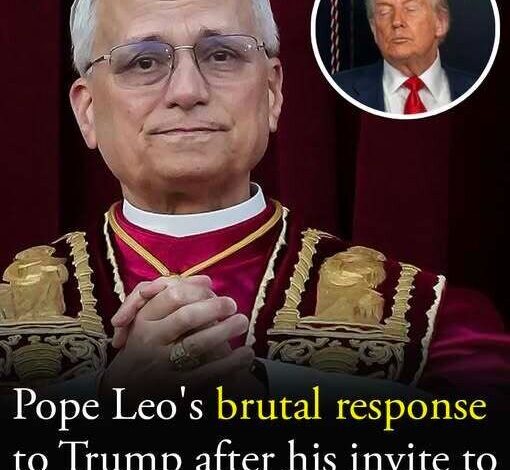
Pope Declines Invitation to Trump’s “Board of Peace” Initiative
President Donald Trump has reignited international debate with the launch of a new initiative called the “Board of Peace,” intended to address conflicts in war-torn regions such as Gaza. However, one of the most high-profile invitations has now been formally declined: the Vatican.
Pope Leo has chosen not to participate, with senior Vatican officials expressing reservations about both the structure and leadership of the proposed board. The response has drawn attention not only for the Pope’s moral authority but also for its broader diplomatic implications.
What Is the “Board of Peace”?
According to the Trump administration, the “Board of Peace” is designed as a coalition to tackle major global conflicts, starting with Gaza. Officials have framed it as a new path to stability in regions plagued by prolonged violence.
Participation comes with a significant financial commitment: permanent membership reportedly requires a $1 billion contribution. Several countries—including Germany, Canada, France, Italy, Norway, Sweden, the United Kingdom, and Ukraine—have declined. Others, such as Israel, Argentina, Russia, Hungary, and Saudi Arabia, reportedly agreed to participate.
The proposal has prompted debate among diplomats and policy experts. Critics question whether a board led by a single nation, rather than a multilateral body, could serve as a neutral mediator in global conflicts.
The Vatican’s Deliberation
When the invitation was first extended in January, Vatican officials did not respond immediately, taking time to consider the proposal carefully. This measured approach reflects the Holy See’s longstanding method in international affairs, prioritizing principles of global cooperation over immediate political alignment.
Now, however, the decision is clear. Cardinal Pietro Parolin, the Vatican’s Secretary of State and chief diplomat, confirmed that Pope Leo believes conflicts like Gaza should be addressed through established international institutions, particularly the United Nations.
The Vatican’s message is firm but subtle: peace efforts should remain multilateral, not guided by a board organized and led by a single nation. While Pope Leo did not issue a lengthy public statement, the decision aligns with his consistent emphasis on human dignity, international cooperation, and collective responsibility.
In recent months, the Pope has spoken on the fragility of human rights, warning that peace cannot be achieved without protecting freedom and dignity, especially for vulnerable populations such as refugees and migrants.
A Diplomatic Divide
The Vatican’s refusal highlights a philosophical split. The Trump administration promotes the “Board of Peace” as a nimble alternative to slow or ineffective international institutions, arguing that a streamlined structure can act more quickly.
By contrast, the Holy See favors multilateral diplomacy, emphasizing neutrality and global legitimacy. Aligning too closely with a single nation’s initiative—particularly one with significant financial obligations—could compromise that perception.
Several European allies have also declined participation, suggesting skepticism extends beyond the Vatican. Meanwhile, the nations that have agreed to join reflect a complex mix of geopolitical interests, highlighting the shifting landscape of global alliances.
The Pope’s Consistent Message
Throughout his papacy, Pope Leo has emphasized compassion, dialogue, and the protection of human rights. He has urged world leaders to prioritize humanitarian concerns over political gain and has cautioned that lasting peace must be built collectively, not imposed.
His decision not to join the “Board of Peace” is consistent with this philosophy. Instead of endorsing a single-country initiative, the Vatican is signaling support for existing frameworks designed to address international crises inclusively.
Symbolic Significance
The Pope’s refusal carries weight. As the spiritual leader of over a billion Catholics, his participation would have lent moral authority and global visibility to the initiative. Declining, conversely, sends a clear message about how the Vatican believes peace should be pursued.
This decision is not an expression of hostility toward the United States or President Trump personally; rather, it reflects institutional priorities and a commitment to maintaining a mediating role capable of engaging multiple sides in conflict.
Looking Ahead
It remains unclear how the “Board of Peace” will progress without broader international support. Whether additional nations will join or the structure will evolve is yet to be seen. For now, the Vatican’s position is clear: sustainable peace is best pursued through inclusive global institutions, not exclusive boards requiring financial entry.
At its core, the debate raises a central question: who should lead global peace efforts? Individual nations with resources and political momentum, or multinational bodies grounded in collective governance?
For the Vatican, the answer is unambiguous: peace is a shared responsibility. The Pope’s decision adds another layer of complexity to an already contentious initiative, underscoring that in global diplomacy, symbolism matters as much as action.