The Legend Of The Silver Microphone Why Phil Donahues Groundbreaking Daytime Revolution Changed Television History And Our Society Forever

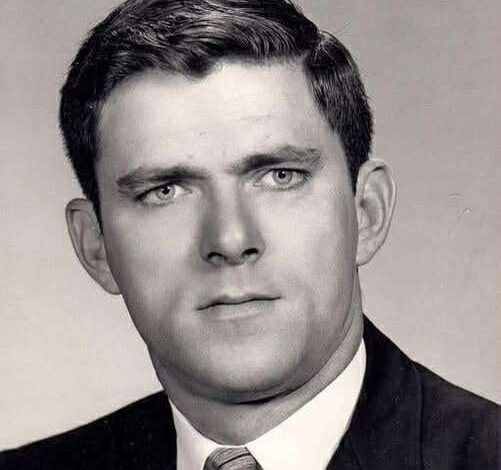
Modern media is often described as fractured—shaped by algorithms, divided by echo chambers, and driven by speed rather than depth. Conversations today tend to splinter quickly, with audiences clustering around viewpoints that reinforce what they already believe. Yet there was a time when television, at its best, functioned differently. It acted as a kind of shared civic space. And few figures embodied that idea more clearly than Phil Donahue.
With his distinctive presence and groundbreaking format, Donahue transformed daytime television into something far more ambitious than entertainment. He created a forum—one that invited ordinary people into conversations about extraordinary and often uncomfortable topics. Long before social media debates and viral outrage cycles, his show offered a place where disagreement could unfold in real time, where questions weren’t prepackaged, and where listening was not just encouraged, but essential.
Donahue didn’t simply host conversations—he redefined what a talk show could be. At a time when daytime programming leaned heavily on light segments and domestic themes, he sensed that audiences were ready for something deeper. His most radical innovation was deceptively simple: he handed the microphone to the audience. Instead of keeping the focus on celebrity guests or expert panels, he brought everyday voices into the center of the discussion. Viewers at home were no longer passive observers; they saw reflections of themselves asking questions, challenging authority, and sharing lived experiences.
This shift altered the power structure of television. Authority was no longer confined to the stage. It moved outward, into the room, creating a dynamic where expertise and personal experience could meet—and sometimes collide. That collision was often the point.
What made Donahue’s format especially compelling was its unpredictability. The show unfolded live, with minimal filtering. There were no guarantees about where a conversation would go, no scripts to smooth over tension. That openness created moments of discomfort, but also moments of clarity. Donahue didn’t try to eliminate friction—he used it. He understood that meaningful dialogue often begins where comfort ends.
His choice of topics reflected that philosophy. He tackled issues that were, at the time, deeply polarizing—feminism, civil rights, war, religion, public health. But he approached them not as problems to be solved within the hour, but as conversations to be explored. The goal wasn’t resolution; it was understanding.
Equally important was the way he carried himself within that space. Donahue was rarely stationary. He moved through the audience, listening as much as speaking, responding rather than directing. He positioned himself less as an authority and more as a facilitator—someone willing to ask questions alongside everyone else. That approach created a tone of curiosity rather than confrontation, even when disagreements were sharp.
By connecting personal stories to broader social issues, he gave weight to experiences that might otherwise have been dismissed. Individual voices became entry points into larger conversations about policy, culture, and identity. In doing so, he bridged the gap between the personal and the political in a way that felt immediate and human.
The cultural impact of that approach was significant. Donahue’s show became a platform for voices often excluded from mainstream media—activists, marginalized individuals, and people navigating deeply personal challenges. It normalized the idea that disagreement could exist without hostility, and that listening to opposing views was not a weakness, but a necessary part of public life.
In contrast, today’s media landscape often rewards certainty over curiosity. Speed over reflection. Outrage over nuance. Conversations are compressed into short bursts, stripped of context, and amplified in ways that encourage division rather than understanding. In that environment, the Donahue model feels almost radical in retrospect.
What set him apart wasn’t just his format, but his mindset. He was willing to be challenged. Willing to admit uncertainty. Willing to let conversations unfold without forcing them into neat conclusions. That humility created a kind of authenticity that is difficult to replicate in more tightly controlled, highly produced formats.
His legacy, then, is not just about television—it’s about the kind of public life he helped model. One where dialogue is not about winning, but about engaging. Where disagreement is not a failure, but a starting point. And where being heard matters just as much as being right.
In a time when connection often feels diluted by noise, Phil Donahue’s work serves as a reminder of what conversation can be at its best: open, imperfect, and capable of expanding understanding rather than narrowing it.