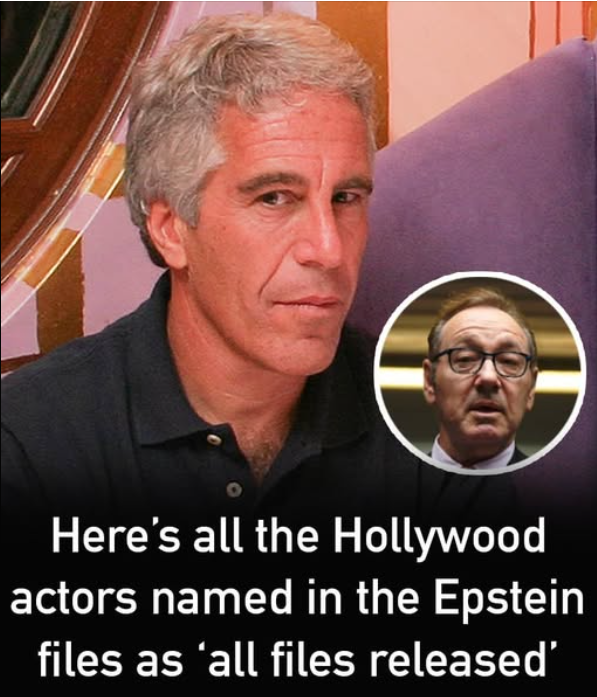
The list of names is staggering—a who’s who of Hollywood, spanning actors, directors, producers, and other influential figures whose work has defined the entertainment industry for decades. And with these names come questions that unsettle: How close were these connections? Who was aware of what, and when? As millions of pages from Jeffrey Epstein’s secret archive continue to surface, the public watches as some of the brightest stars are thrust back under an intense, unforgiving spotlight. Every email, photograph, flight log, and record of private gatherings—even a so-called “final list” of 305 prominent individuals—sparks speculation and anxiety. Federal authorities have been clear that simply appearing in the files is not proof of wrongdoing. Yet in an industry already shaken by the legacies of Harvey Weinstein, Roman Polanski, and the #MeToo movement, even being named carries a weight of implication that can feel nearly criminal.
Beneath the sensational headlines lies a far more complex and troubling reality. The Epstein archive, now painstakingly documented, is less a roster of criminals than a sprawling, tangled map of influence, opportunity, and exposure to risk. It records chance encounters at parties, networking events, private homes, and private flights—and in some cases, unnerving proximity to a predator whose crimes were hidden for years. For Hollywood, where image is currency and reputation is everything, these documents highlight how mere association can cast shadows, even on those with no wrongdoing. The archive exposes the delicate balance between ambition, curiosity, and ethics, showing how easily people can enter morally gray areas when power and opportunity intersect.
Investigators have consistently stressed that appearing in Epstein’s records does not equate to criminal liability, and no new entertainment figures have been charged. Yet the documents act as a stark lesson in perception: a single photo, email, dinner invitation, or flight can be misinterpreted, exploited, or misunderstood once it enters the public domain. Context is fragile, intentions can be misconstrued, and reputations can be permanently damaged, even in the absence of legal evidence.
As the archive continues to emerge, Hollywood faces hard truths about its culture. Questions linger not just about who knew what, but why so many remained silent, how privilege often outweighed responsibility, and how easily fame and ambition can obscure danger. The records reveal a world in which proximity to power can be both an advantage and a trap, where networking can inadvertently bring individuals near predators, and where the line between association and complicity is perilously thin. For an industry still reckoning with its past, Epstein’s legacy stands as a sobering reminder: even the appearance of connection, without wrongdoing, can carry profound and lasting consequences.