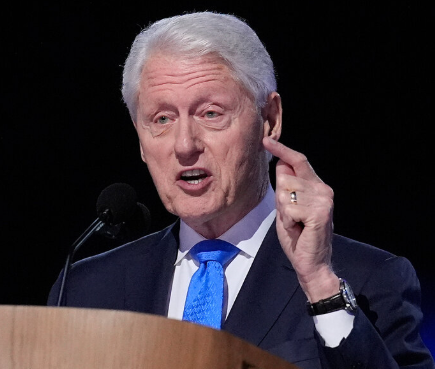
A visibly thinner, unmistakably fatigued Bill Clinton looked straight into the camera and said he intends to be here “a lot longer.” The words were hopeful, even resolute. His face, however, told a more layered story. Gratitude was evident — but so was the quiet gravity of someone who has recently stood much closer to the edge than most casual observers might realize.
This was not the aftermath of a routine hospital stay. Following a sudden and serious hospitalization for sepsis, the former president is now speaking more candidly about just how dangerous the situation became, and what physicians discovered as they raced to stabilize him.
At moments, his voice wavered. He spoke deliberately, choosing words with care, offering heartfelt thanks to the medical team that treated him and emphasizing that their speed and decisiveness were critical. “Listen to your bodies,” he urged Americans, stressing that early symptoms — however minor they may seem — should never be dismissed. Beneath the calm delivery was a palpable urgency, the kind that only comes from personal confrontation with something irreversible.
He suggested, without dramatics, that he still feels called to unfinished work — causes and commitments he believes require his presence and energy. But woven into that determination was an unmistakable admission of vulnerability. The infection had entered his bloodstream. The diagnosis was severe. And as he acknowledged how quickly his condition escalated, he appeared to quietly wrestle with a universal, unspoken question: how fragile is the future we assume is waiting for us?
The recovery video feels less like a public statement and more like a private reckoning shared aloud. There are no policy arguments, no political framing, no partisan overtones. Instead, there is a man reflecting on health, fear, timing, and gratitude. Physically, he appears diminished compared to the energetic figure long associated with his public image. Mentally, however, he remains focused, deliberate, and reflective.
When he says he wants to stay and “do the most good” he can, it does not land as rhetoric. It sounds like the resolve of someone who has briefly imagined a world in which doing anything at all was no longer an option.
His gratitude toward the doctors and nurses at UC Irvine Medical Center stands out in particular. The thanks do not feel ceremonial or obligatory. They carry the weight of someone who understands how narrowly events turned. This was not a scare brushed off with optimism. According to details shared by his medical team, a urological infection spread into his bloodstream, triggering sepsis. While it did not advance to full septic shock, it was severe enough to demand immediate intervention, intensive monitoring, and rapid treatment.
His vital signs were stabilized. His white blood cell count slowly returned to normal. Only after careful observation was he cleared to fly back to New York, where he continues his course of antibiotics under close supervision.
Even with those reassuring updates, the seriousness of the episode lingers. Sepsis is notoriously unpredictable, capable of accelerating within hours — particularly in older patients. The fact that he is now home recovering does not erase how easily the outcome could have shifted. Clinton’s own words underscore that reality. Rather than focusing on technical details of treatment, he centered his message on awareness: noticing symptoms, acting early, and respecting the body’s warning signs before they are impossible to ignore.
There is something deeply sobering about hearing a former president speak less about governance and more about blood counts, infections, and timing. The emphasis is no longer on endurance in office, but on endurance itself. The tone is not triumphant. It is reflective. It acknowledges that resilience does not equal invulnerability — and that even the strongest lives have limits.
Ultimately, his appearance serves as a stark reminder that titles and accomplishments offer no immunity. Hospital rooms do not recognize rank. Infections do not pause for legacy. The bloodstream does not negotiate.
His recovery continues, and his determination to remain engaged is clear. But the moment has subtly reframed him — not as a symbol of political longevity, but as a human being who brushed against the edge of mortality and stepped back, changed by the encounter.
And in his quiet insistence to listen to our bodies, there may be the most powerful message of all: time is never guaranteed, and awareness can be the difference between a warning — and a goodbye.