The 32-Minute Duel in the Strait of Hormuz, How the World Narrowly Avoided a Global Conflagration After an Unprecedented Missile Barrage

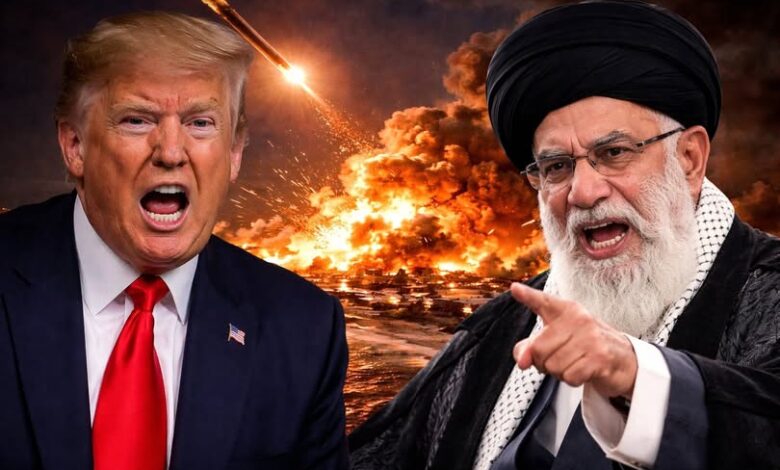
On the morning of March 1, 2026, the Strait of Hormuz—long known as one of the world’s most fragile and strategic waterways—shifted from a tense transit route into a potential flashpoint for global conflict. What had traditionally been a careful balance of presence and warning suddenly escalated into something far more dangerous. A routine passage by a United States carrier strike group reportedly turned into 32 minutes of intense military confrontation, a brief but critical window that sent shockwaves through global markets and raised fears of a much larger war.
The Strait itself is a narrow corridor through which roughly one-fifth of the world’s oil supply passes. In such a confined space, even the smallest miscalculation can have enormous consequences. As the U.S. carrier group moved through the region, the familiar pattern of surveillance by Iranian vessels and standard radio exchanges quickly unraveled.
According to reports, the situation escalated when anti-ship cruise missiles were launched from the Iranian coastline, targeting the U.S. fleet.
What followed was a rapid and highly coordinated response.
Within seconds, the Aegis Combat System aboard U.S. destroyers activated. Interceptor missiles, including SM-2 and SM-6, were launched to neutralize the incoming threats. Trails of exhaust cut across the sky as the defense systems engaged.
But the confrontation extended beyond visible firepower.
Electronic warfare systems were simultaneously deployed, working to disrupt targeting signals, confuse missile guidance systems, and create false targets. It became a battle not only of weapons, but of information—an invisible conflict unfolding across the electromagnetic spectrum.
During those 32 minutes, the tension was not limited to the battlefield.
In Washington and Tehran, decision-makers monitored events in silence, aware of the potential consequences. Around the world, financial markets reacted instantly. Oil prices surged as the possibility of a major disruption in supply became real.
The stakes were clear.
A single successful strike on a U.S. carrier could have triggered a chain reaction beyond control.
While defensive systems worked to intercept the missiles, the U.S. response quickly shifted to offense.
Using airborne surveillance platforms and satellite data, the origin of the missile launches was identified. Within minutes, counterstrikes were reportedly carried out against launch sites, radar systems, and command centers along the coast.
The objective was immediate and decisive: eliminate the threat before it could escalate further.
By the end of the 32-minute exchange, the immediate danger had passed.
No U.S. vessels were reported hit—a result attributed to the effectiveness of layered defense systems. Yet the outcome did little to reduce the significance of what had occurred.
The long-standing balance in the Strait had been disrupted.
What was once a controlled tension had crossed into direct confrontation.
Military analysts are likely to study this incident for years.
It highlights how quickly modern conflict can escalate, especially in regions where geography leaves little room for error. In such environments, the transition from routine operation to active engagement can happen in moments—often faster than human response can keep up.
The speed of the response also revealed a deeper concern.
While advanced systems allow for rapid neutralization of threats, they also reduce the time available for diplomacy. When decisions are made in seconds and actions follow immediately, the opportunity for de-escalation becomes extremely limited.
In this context, the line between contained conflict and widespread war grows dangerously thin.
In the aftermath, activity in the Strait has resumed, but the atmosphere has changed.
What was once a steady tension now feels more volatile—less predictable, more immediate. The events of that morning serve as a reminder of how fragile global stability can be, especially in regions tied so closely to economic and energy systems worldwide.
The incident was not just a military encounter.
It was a warning.
A demonstration of how quickly routine operations can shift into crisis—and how close the world can come to a larger conflict without warning.
As the waters of the Strait return to their usual flow, the questions remain.
Was this a moment of caution—a signal to step back and reassess?
Or was it the beginning of a new phase, where escalation becomes more frequent and harder to control?
For now, one thing is clear:
Those 32 minutes revealed just how narrow the margin is between stability and chaos—and how much the world still depends on keeping that balance intact.