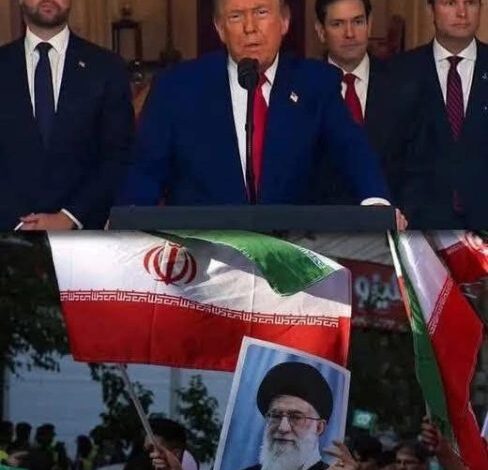
In a media environment driven by speed and clicks, the boundary between verified reporting and viral alarmism is increasingly difficult to discern. Over the past several days, a surge of online headlines has warned of an “urgent” and imminent Iranian attack on the United States, often claiming that a specific state would be targeted first. While such claims are designed to provoke fear, they oversimplify — and in some cases distort — a far more complex geopolitical reality.
A Tense but Unconfirmed International Moment
As of mid-February 2026, relations between the U.S. and Iran are undeniably strained. Diplomatic efforts have faltered following a ten-day ultimatum issued by the administration of Donald Trump on February 19, demanding concrete proposals from Tehran regarding its nuclear ambitions and regional activities. Iran’s response has included highly visible naval exercises with Russian forces in the Gulf of Oman — a clear signal of military readiness.
Still, despite this escalation in rhetoric and maneuvering, there is no confirmed intelligence or official warning indicating an imminent missile strike on U.S. soil. National security analysts emphasize that many of the alarming reports circulating online originate from social media accounts and sensationalist blogs that capitalize on existing tensions to drive traffic, rather than to inform the public accurately.
Military Posturing and the Narrow Path of Diplomacy
The current situation reflects a narrow corridor between diplomacy and deterrence. The U.S. has increased its regional footprint, deploying advanced aircraft and positioning major naval assets closer to the eastern Mediterranean. Iran, meanwhile, continues to grapple with internal unrest and the aftermath of a 2025 conflict with Israel that damaged key military and nuclear facilities.
Defense experts broadly agree that a direct missile strike against a specific U.S. state remains highly unlikely. More realistic concerns involve asymmetric responses — cyber operations, proxy attacks on U.S. interests abroad, or drone activity. For many Americans, however, the most immediate impact comes not from missiles but from misinformation, as dramatic headlines create anxiety without offering credible evidence or practical guidance.
Domestic Tragedy Closer to Home: Stockton, California
While global threats dominate headlines, local crises continue to inflict lasting harm. In Stockton, residents are mourning after a mass shooting at a child’s birthday party turned a weekend celebration into tragedy. Gunfire erupted inside a crowded banquet hall, killing four people — including three children — and injuring eleven others.
San Joaquin County Sheriff Patrick Withrow described the attack as targeted yet senseless, urging witnesses and anyone with video footage to assist investigators. The Stockton shooting underscores a harsh reality: even as Americans fear distant geopolitical conflicts, domestic gun violence remains an immediate and persistent danger.
The Search for Nancy Guthrie
At the same time, investigators in Arizona continue searching for Nancy Guthrie, the 84-year-old mother of television journalist Savannah Guthrie. Missing since early February, the case has advanced rapidly following new forensic leads.
Surveillance footage captured a masked individual carrying an “Ozark Trail” hiking backpack, a product sold exclusively by Walmart. This detail allowed authorities to trace purchase records and narrow their search. A backpack believed to be connected to the case was later recovered several kilometers from Guthrie’s home and is now undergoing forensic examination, developments that have deeply shaken her family.
Public Figures Under the Digital Microscope
The modern media cycle also continues to fixate on public figures in ways that often eclipse substance. Philanthropist Susan Dell recently faced intense online scrutiny after a White House appearance, despite her family’s pledge of $6.25 billion toward children’s investment accounts — a move with the potential to benefit millions of Americans.
Similarly, Melania Trump’s return to the national stage has sparked widespread speculation about her personal support network, diverting attention from broader policy and social discussions. These episodes reflect a recurring pattern: digital discourse often gravitates toward appearance and personality rather than impact and outcomes.
Staying Grounded in an Overheated Information Age
Navigating 2026 requires vigilance not just about global instability, but about the information we consume. The situation involving Iran is serious and warrants careful monitoring by policymakers and experts, yet claims of an imminent, state-specific attack lack verified backing.
By contrast, the violence in Stockton and the disappearance of a vulnerable elderly woman in Arizona are tangible crises with real victims and urgent needs. As global and domestic pressures converge, the challenge for the public is to prioritize evidence over hype, empathy over outrage, and clarity over sensationalism in an increasingly volatile news environment.