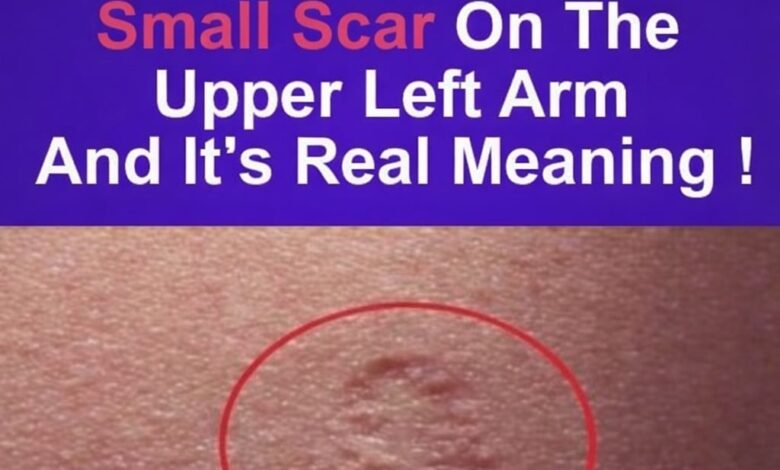
Long before it faded into a faint circle on someone’s upper arm, that small scar began as something intentional. The smallpox vaccine wasn’t a simple injection like many modern shots. It was administered through a series of quick punctures to the skin, introducing a weakened form of the virus so the body could build protection against the real disease.
A blister would form. Then a scab. Eventually, a permanent mark remained. That scar was proof the immune system had responded — and learned.
For generations, that small imprint symbolized protection in a world where smallpox was a constant and terrifying threat. Before eradication, the disease killed millions and left many survivors blind or permanently scarred. Entire communities lived with the fear that a single exposure could spark devastation.
Those who still carry the vaccine scar carry a quiet connection to that era — a time when public health campaigns required extraordinary coordination. Scientists refined the vaccine. Healthcare workers traveled to cities and remote villages alike. Families rolled up sleeves not just for themselves, but for their neighbors.
The global vaccination effort ultimately achieved something once thought impossible: in 1980, smallpox was declared eradicated worldwide. It remains one of humanity’s greatest public health victories.
Today, most people no longer receive the smallpox vaccine, and most children grow up without that circular mark. Its absence reflects success — a disease so thoroughly defeated that routine immunization is no longer necessary.
Yet for those who still bear the scar, it serves as a subtle reminder of what collective action can accomplish. It tells a story of science, cooperation, and resilience. A small circle on the arm, once formed in urgency and hope, stands as proof that even humanity’s oldest threats can be overcome when we confront them together.