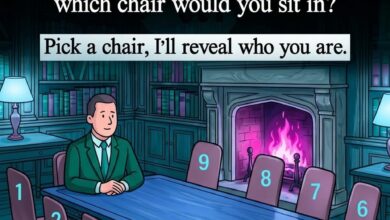
In the hyper-accelerated digital ecosystem of March 2026—where trends erupt and vanish in the time it takes to refresh a feed—a baffling two-syllable response has emerged as the internet’s latest obsession: “six-seven,” often typed simply as “6-7.” What appears, at first glance, to be meaningless filler has quietly become a centerpiece of online interaction. Scroll through comment sections, livestream chats, or short-form videos and you’ll see it everywhere—substituted for real answers, dropped after dramatic reveals, or posted with deliberate irrelevance.
The confusion it generates isn’t accidental. It’s the point.
For many members of Generation Z and Generation Alpha, the appeal lies not in a hidden meaning but in the unapologetic absence of one. “Six-seven” doesn’t clarify, persuade, or contribute. It interrupts. It flattens expectation. It shrugs at the demand for coherence. In a media climate saturated with explainers, think pieces, and algorithmic urgency, the phrase offers a strange kind of relief—a minimalist response to maximalist noise.
From Soundbite to Social Code
The phrase traces back to late 2024, when a catchy hip-hop refrain featuring the numbers caught fire across video platforms. Initially, it was just an earworm—rhythmic, repeatable, and easy to remix. But repetition turned it into something else. Detached from its musical roots, “six-seven” became a portable fragment, migrating into captions, punchlines, and reaction clips.
As the sound circulated, it shed its original context. By 2026, it no longer referenced the song at all. Instead, it functioned as a conversational wildcard. Asked a serious question? “Six-seven.” Witness a shocking twist? “Six-seven.” Need a response but don’t want to engage? Again: “six-seven.”
It operates like a conversational reset button—offering no clarity and inviting no follow-up. In an era shaped by misinformation crackdowns, political friction, and nonstop commentary, its refusal to mean anything feels oddly intentional. It is not an argument. It is an exit.
The Blueprint of an Absurdist Meme
Observers of digital culture have begun describing “six-seven” as a structural meme—a format rather than a definition. Unlike slang terms that signal belonging through shared meaning, this phrase bonds users through shared absurdity. It’s less about what it says and more about how it feels.
Creators amplify the effect through exaggerated pauses, dramatic zoom-ins, or cinematic cuts that build anticipation—only to land on the anticlimactic rhythm of “six-seven.” The humor emerges from the subversion of payoff. Viewers expect insight, a twist, or commentary. Instead, they receive a blank.
That blankness is the punchline.
The trend has even seeped offline. In classrooms, hallways, and around dinner tables, the phrase occasionally surfaces as a deadpan response. To some adults, it registers as distraction or defiance. To many young users, however, it’s a subtle badge of generational alignment—an inside joke that resists over-analysis.
Why Meaninglessness Feels Meaningful
The psychological appeal becomes clearer when placed against the backdrop of 2026’s relentless information cycle. Headlines escalate. Timelines accelerate. Every topic becomes urgent. Under those conditions, absurd humor offers decompression. A phrase with no agenda, no marketing tie-in, and no moral stance becomes a small act of resistance.
By embracing a joke that deliberately avoids substance, users reclaim a sliver of digital space that isn’t optimized for productivity, persuasion, or profit. It’s playful disengagement. It’s irony without instruction. It’s a shared understanding that not everything requires interpretation.
There’s confidence in that refusal.
The Inevitable Fade
Like all viral phenomena, “six-seven” is unlikely to endure. Digital culture moves at breakneck speed; today’s in-joke becomes tomorrow’s archived relic. The same platforms that amplified it will eventually replace it with something equally perplexing.
And that’s part of the pattern.
“Six-seven” has no manifesto, no deeper code, no hidden ideology. Its lifecycle is the message. It thrives precisely because it does not attempt permanence. It exists in the moment, a fleeting signal in the ongoing scroll.
Ultimately, the trend underscores a humbling reality of online life: not everything can—or should—be decoded. Sometimes the most accurate reflection of a chaotic environment is a chaotic response. The humor lies in the emptiness. The connection lies in shared confusion.
In a world crowded with spectacle and seriousness, “six-seven” stands as a small, stubborn reminder that absurdity still has a place—and that sometimes, saying nothing at all says enough.