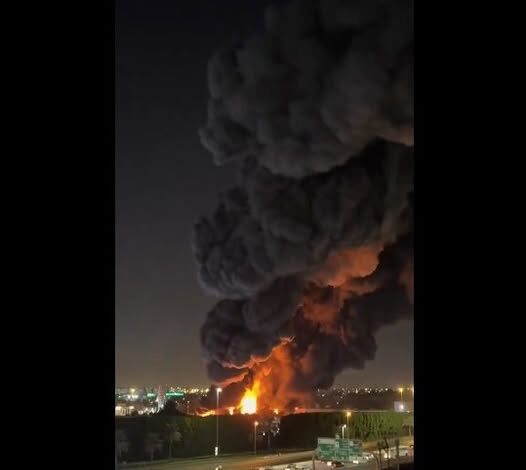
The missile that struck the city of Beit Shemesh did more than destroy a building—it shattered a fragile sense of security that many residents had tried to maintain despite months of growing tension. The impact reduced part of a synagogue to rubble, sending dust, broken concrete, and shattered glass cascading into the surrounding streets. For a place that had long served as a center of prayer, reflection, and community life, the sudden devastation felt deeply personal to those who lived nearby. What had once been a sanctuary of calm became the scene of frantic rescue efforts and unimaginable grief.
Beneath the synagogue, a reinforced shelter had been prepared as a place of protection in times of danger. People who had rushed inside believed they were following the safest course of action, seeking refuge as warning sirens echoed through the city. But the violence of the explosion above them changed everything. When the structure collapsed, heavy debris fell into the space below, turning what was meant to be a safe haven into a deadly trap. Rescue teams later described the scene as chaotic and heartbreaking, with twisted metal, broken stone, and thick dust making it difficult to move or even see clearly.
Emergency responders arrived quickly, navigating narrow streets and damaged pathways to reach the site. Paramedics and volunteers worked side by side, carefully searching through the wreckage for signs of life. In those first critical moments, every second mattered. Medics moved from person to person, making rapid decisions about who needed immediate treatment and who could wait. Their training guided them through the overwhelming situation, but the emotional toll was unmistakable.
Ambulances lined nearby roads as the injured were transported to hospitals across the region. Medical staff had already been alerted that casualties were on the way, and emergency departments prepared for an influx of patients. Doctors, nurses, and technicians moved swiftly, setting up additional treatment areas and coordinating with trauma specialists. Families soon began arriving as well, anxiously searching for information about loved ones who might have been near the synagogue when the missile struck.
Meanwhile, investigators began the painstaking process of analyzing what had happened. Security officials examined fragments of the missile and traced the trajectory of the attack, hoping to determine where it originated and how it managed to reach its target. Specialists documented the damage, while military and intelligence teams coordinated with international partners to piece together the broader strategic picture. Each detail could hold important clues about the circumstances surrounding the strike.
Beyond the immediate destruction, the emotional impact spread quickly through Beit Shemesh and far beyond its borders. Residents who had grown used to occasional sirens suddenly felt a deeper vulnerability. Many described how the event made the ongoing conflict feel closer and more unpredictable than before. Conversations in homes, schools, and workplaces turned to questions about safety and what might happen next.
For ordinary people in the area, daily routines have shifted dramatically. Sirens have become a constant presence in their lives, dictating when to stop everything and run for shelter. Parents have adopted new habits, sleeping in clothing that allows them to move quickly if an alarm sounds in the middle of the night. Children are told to keep their shoes nearby so they can reach protective spaces faster. Even simple tasks—like cooking dinner or watching television—now carry an undercurrent of vigilance.
The psychological strain of living with that constant alertness is difficult to ignore. Many families describe a tension that never fully disappears, even during quiet moments. Every sudden noise can spark worry that another siren is about to begin. For young children especially, the uncertainty can be confusing and frightening. Parents try to reassure them while managing their own fears at the same time.
Government officials have urged the public to remain calm and to continue following safety instructions. They emphasize the importance of staying prepared and responding quickly to alerts, while also attempting to maintain a sense of stability in public life. Community leaders and local organizations have stepped forward as well, offering support to those affected by the attack and helping coordinate assistance for victims and their families.
Despite these efforts, anxiety spreads quickly in moments like these. Rumors and speculation circulate through social media and word of mouth, sometimes faster than verified information can reach the public. Authorities work to provide updates, but the emotional weight of uncertainty makes it difficult for many people to feel reassured.
In the background, intense discussions are taking place within government offices and military command centers. Decisions about how to respond to the attack carry enormous consequences. Leaders must weigh security concerns, diplomatic considerations, and the potential for further escalation. These conversations happen behind closed doors, but their outcomes will shape the direction of events in the days and weeks ahead.
For the residents of Beit Shemesh, however, the focus remains on recovery and resilience. Volunteers have already begun helping clear debris and provide supplies to those affected. Religious and community leaders are organizing gatherings to support families who lost loved ones and to help the broader community process what has happened. In times of crisis, such acts of solidarity often become a crucial source of strength.
The damaged synagogue itself held deep meaning for many people. It was more than just a building—it represented years of shared traditions, celebrations, and moments of reflection. Weddings, holidays, and countless prayers had taken place within its walls. The destruction of such a space can feel like the loss of a piece of communal identity.
Yet even in the aftermath of tragedy, communities often find ways to rebuild and carry forward. Residents have already begun discussing how the site might one day be restored or commemorated. The process will take time, and the emotional wounds may last much longer, but the determination to rebuild is a powerful response to destruction.
As night falls over the region, many people continue to listen closely for the sound of sirens. The uncertainty of what may come next hangs in the air. For some, this attack may mark a turning point—a moment when the reality of the conflict became impossible to ignore. For others, it may feel like another chapter in a long and painful history of tension and violence.
In the hours ahead, the choices made by leaders and the reactions of those involved will shape the path forward. Whether the strike on Beit Shemesh becomes a catalyst for wider escalation or a moment that prompts restraint remains to be seen. What is certain, however, is that the people who lived through that day will carry its memory with them for years to come.
The shattered synagogue, the frantic rescue efforts, and the quiet determination of those who refuse to abandon their community all stand as reminders of how quickly ordinary life can change. And for the residents who now live by the rhythm of sirens and shelters, the hope remains that one day those alarms will finally fall silent.