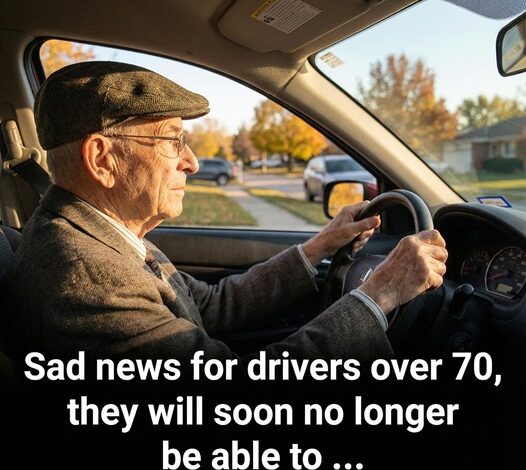
In the days following the crash, something in the town quietly shifted. The usual rhythm of daily life slowed, and conversations that had long been avoided finally surfaced. Around kitchen tables and over cups of coffee that grew cold before anyone finished them, families faced difficult truths. Adult children sat across from parents who had once guided every step of their lives and spoke words that felt almost impossible to say: “It might not be safe anymore.”
For many older residents, the suggestion carried a painful weight. Some reacted with frustration, their voices rising in defense of their independence. Others listened in silence, their expressions revealing a quiet sadness that needed no explanation. Driving had never been just about transportation. It symbolized freedom, self-reliance, and the ability to remain fully part of the world beyond their front doors.
The car, after all, had long represented much more than metal and wheels. It was proof of capability—of still being able to take care of oneself, to visit friends, to run errands without assistance. For many elders, handing over the keys felt like surrendering a piece of their identity.
Yet beneath the tension of those conversations lay something deeper and more compassionate. Families began to realize that love sometimes requires setting boundaries rather than granting permission. What once seemed like interference began to look more like protection.
Doctors in the community also started speaking more openly about the realities that come with aging. Instead of relying solely on statistics and clinical advice, they listened to stories—about near misses at intersections, moments of confusion behind the wheel, or slower reaction times that had begun to worry both drivers and their loved ones.
Neighbors shared their own experiences, offering support rather than judgment. Slowly, the conversation shifted from confrontation to understanding.
And in some homes, something remarkable happened.
A few elders, after reflecting on the situation, placed their car keys gently on the table themselves. It wasn’t always easy, and it certainly wasn’t without emotion. But in those quiet moments, they made a decision not out of pressure or defeat, but out of care for the people around them.
By choosing to step back before circumstances forced the decision, they showed a different kind of strength—one rooted in responsibility and love.
What began as a painful conversation gradually revealed a deeper truth: sometimes the hardest choices are also the most compassionate. In accepting new limits, many families discovered that dignity isn’t defined by what we hold on to, but by the care we show for others.
And for those who placed their keys down willingly, the act became not a loss of independence, but a final, powerful gesture of protection for the community they had spent a lifetime helping to build.