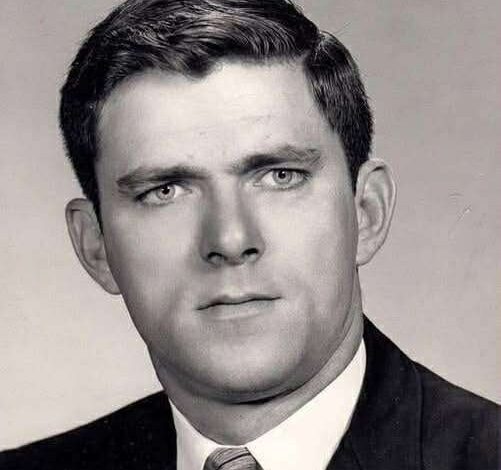
Phil Donahue’s absence feels less like the loss of a television host and more like the disappearance of a public square that happened to be built inside a studio. For decades, he transformed daytime television into a place where ordinary people could step into the light and confront ideas, institutions, and each other without the layers of insulation that usually protect power from scrutiny. His stage looked simple—chairs, microphones, an audience—but what happened there was anything but ordinary. It was a place where grief, anger, curiosity, and courage collided in real time, and the outcome was never fully predictable.
Donahue understood something that feels increasingly rare today: conversation is not supposed to be comfortable. It is supposed to be honest. The people who walked onto his show were not polished pundits trained to deliver perfect talking points. They were parents, activists, survivors, skeptics, believers, critics, and sometimes people who had never spoken publicly before. They carried their contradictions with them. They spoke imperfectly. They sometimes changed their minds. And millions of viewers watched not because the discussions were tidy, but because they were real.
At a time when television often treated audiences as passive spectators, Donahue treated them like participants. He moved through the crowd with a microphone, inviting questions, challenges, and uncomfortable truths. A viewer at home could sense that something meaningful might happen at any moment—that a question from someone in the audience could disrupt the entire direction of the conversation. The unpredictability was the point. It reminded everyone watching that democracy, at its core, is messy and human.
He tackled subjects that many networks once considered too volatile for daytime television: war, inequality, women’s rights, religion, sexuality, political power, and the lived experiences of people who were often ignored or marginalized. Yet he approached these issues not with spectacle, but with curiosity. Donahue didn’t try to dominate the room. His strength was in his willingness to listen long enough for the complexity of an issue to reveal itself. He asked questions that were sometimes blunt, sometimes compassionate, but almost always aimed at getting closer to the truth rather than winning an argument.
What made the show remarkable was the sense of risk. There were no algorithmic guardrails deciding what could be said. There were no viral clips shaping every word before it was spoken. The conversation unfolded in real time, and everyone involved—host, guest, audience—had to live with whatever emerged. That vulnerability created a kind of authenticity that feels difficult to replicate in today’s media environment, where the pressure to perform often overwhelms the desire to understand.
In many ways, Donahue’s program functioned as a rehearsal space for democracy. It gave people a chance to encounter perspectives they might never have heard otherwise. It forced viewers to sit with disagreement instead of immediately escaping into ideological comfort zones. Watching the show meant watching people wrestle with ideas that mattered to their lives, their communities, and their future.
Today’s media landscape is louder, faster, and more fragmented. Outrage travels faster than reflection. Social platforms reward the sharpest insult or the most dramatic reaction rather than the most thoughtful exchange. Conversations often collapse into performances designed for applause from one’s own side rather than genuine attempts to reach understanding. In that environment, Donahue’s style of engagement can feel almost radical.
But his legacy is not meant to live in nostalgia. It is not simply a memory of “better television” from another era. It is an assignment for anyone who cares about the quality of public conversation today. We cannot recreate his studio or rewind the cultural moment that made his show possible. What we can do is carry forward the principles that made it meaningful.
Those principles are deceptively simple. Listen before responding. Allow complexity instead of forcing every issue into a simple narrative. Ask the question that makes the room uncomfortable, not because discomfort is entertaining, but because honesty often lives on the other side of it. Stay present long enough to hear the answer, even if that answer challenges what you believed when the conversation began.
The microphone that Donahue once carried through a studio audience has effectively been passed to millions of people. Every phone, every platform, every comment section has the potential to become a small version of that public square. Yet the responsibility that comes with that power is rarely acknowledged. Having a voice is not the same thing as having a conversation. The real challenge is learning how to use that voice in ways that create understanding rather than simply amplifying noise.
If there is a meaningful tribute to Phil Donahue, it will not be found in reruns or memorial segments. It will be found in the choices people make when they engage with each other in public spaces—whether those spaces exist in studios, classrooms, community meetings, or online discussions. It will show up when someone pauses long enough to consider another person’s perspective instead of immediately dismissing it. It will appear when a difficult topic is approached with curiosity instead of contempt.
Donahue never promised that conversation would be safe. He understood that confronting real issues can be unsettling and emotionally demanding. But he believed the discomfort served a purpose. When people are willing to face hard questions together, they sometimes discover new possibilities for empathy, accountability, and change.
The world he helped shape on television reminds us that dialogue is not a performance designed for applause. It is a process that requires patience, humility, and a willingness to risk being changed by what we hear. In an age that often encourages us to speak louder rather than listen better, that lesson may be more important than ever.
His chair may now be empty, but the space he created—the idea that honest conversation can bring people closer to understanding one another—remains available to anyone willing to step into it. The real way to honor that legacy is terrifyingly simple and profoundly difficult: stop trying to win the conversation, start trying to understand it, and stay in the room long enough for something real to happen.