Trump Confirmed a Death? The Viral Breaking News That Fooled Thousands Before the Truth Came Out

It started the way many “breaking news” moments do today—sudden, loud, and impossible to ignore.
In a digital world where information moves faster than people can process it, the first headlines appeared almost instantly across social media. They were urgent, dramatic, and carefully worded to spark emotion. Within minutes, posts began circulating that claimed Donald Trump had confirmed the death of someone tied to a major military event.
The language was intense but unclear.
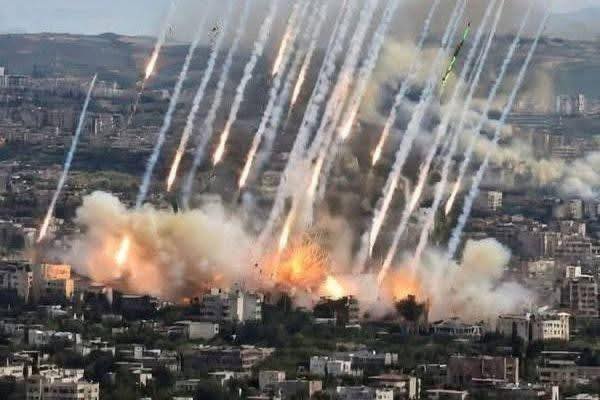
Phrases like “catastrophic loss,” “missile strike,” and “confirmed passing” appeared again and again—often paired with striking visuals, recycled footage, or images stripped of their original context.
The reaction was immediate.
People clicked. Shared. Commented. Reacted.
Concern spread quickly, fueled by curiosity and fear. Social media algorithms—designed to prioritize engagement—pushed the content even further, creating a wave of urgency that felt real, immediate, and undeniable.
But just as fast as the story spread, something else began to surface:
Confusion.
Because beneath the dramatic headlines, one crucial element was missing—clear, verified information.
The claims traced back to early reports suggesting a missile strike tied to a military escalation. The wording implied large-scale consequences and hinted at official confirmation, using Trump’s name to give the story weight—or at least the appearance of it.
But the details didn’t hold up.
Some posts mentioned locations. Others didn’t.
Some implied it had just happened. Others blurred timelines entirely.
And the most important detail—the identity of the person who had supposedly “passed”—was never clearly stated.
Passing of whom?
When?
Under what circumstances?
None of those questions had real answers.
And that wasn’t accidental.
In today’s online environment, headlines are often designed not just to inform, but to compete. The more urgent, emotional, or mysterious they seem, the more likely they are to capture attention. Attaching a recognizable name—especially one as widely known as Donald Trump—only increases that effect.
That’s exactly what happened here.
As the story spread, reactions split into different directions. Some users assumed the worst, interpreting the headlines as evidence of a major global event. Others questioned the credibility, pointing out the lack of official sources. Many, however, shared the posts without verifying them—unknowingly contributing to the cycle that allows unclear or misleading information to spread.
Because when details are missing, people fill in the gaps themselves.
And in stories involving military conflict, those assumptions can quickly escalate into fear and misinformation.
As time passed, the reality became clearer.
There was no official confirmation.
No government statement.
No credible reporting from established news outlets.
The event, as it had been presented, did not exist in the way people were led to believe.
What remained was something else entirely—a fragmented narrative built from vague language, emotional triggers, and strategic ambiguity. The phrase “confirmed passing” had either been taken out of context or intentionally left incomplete to drive engagement.
In short, it wasn’t breaking news.
It was content designed to spread.
This pattern has become increasingly common. In a system where speed is rewarded more than accuracy, information is often packaged for reaction rather than clarity. Headlines are shortened. Context is removed. Emotion replaces detail.
And the cycle repeats:
A vague claim appears.
It spreads rapidly.
People react before verifying.
The reaction fuels further spread.
By the time the truth emerges, the initial impression has already taken hold.
Breaking that cycle requires something simple—but not always easy:
Pause.
Ask questions.
Who is involved?
Where did it happen?
When did it occur?
Is there a reliable source confirming it?
If those answers aren’t clear, the story may rely more on emotion than fact.
In this case, Trump’s name acted as a shortcut to credibility, giving a weak narrative the appearance of importance. But under closer examination, the foundation wasn’t there—no verified event, no confirmation, no evidence.
That doesn’t mean real events don’t happen.
It means this one wasn’t what it claimed to be.
Misinformation doesn’t always come in the form of obvious lies. Often, it looks believable—almost real—but leaves out just enough to mislead. And in a world where information travels instantly, even small gaps can create large misunderstandings.
That’s why slowing down matters.
Checking sources matters.
Reading beyond headlines matters.
Questioning unclear claims matters.
Because every moment spent verifying is a moment that prevents confusion from spreading further.
What began as urgent headlines and dramatic claims ultimately revealed something much simpler:
Not a confirmed tragedy.
Not a verified event.
But a reminder.
That clarity matters.
That accuracy matters.
And that in the constant race between speed and truth, only one of them actually leads to understanding.
In a world where headlines can travel faster than facts,
slowing down may be the most important decision we make.