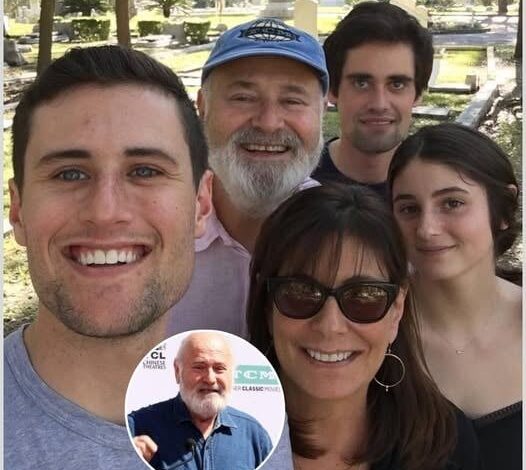
Hollywood has long been shaped by generational legacies, where the fortunes of famous creators often pass down through family lines. But the story surrounding actor and director Rob Reiner—known for classics like When Harry Met Sally, The Princess Bride, and Stand by Me—appears to be taking a different direction.
With an estimated net worth ranging between $180 million and $200 million, Reiner’s financial legacy has naturally drawn public curiosity. For many years, it was widely assumed that his children with his wife, Michele Singer Reiner, would eventually inherit the majority of his wealth. Recently, however, discussions about the structure of his estate suggest that the future of the Reiner fortune may not follow the traditional path many expected.
A Legacy Built Over Decades
Rob Reiner’s place in Hollywood history is deeply rooted. As the son of legendary comedian and filmmaker Carl Reiner, he grew up surrounded by the entertainment industry. Yet he built his own identity through both acting and directing.
He first gained widespread recognition as Michael “Meathead” Stivic on All in the Family, before transitioning into directing some of the most beloved films of the late 20th century. His work helped shape modern romantic comedies and coming-of-age storytelling, turning him into one of Hollywood’s most respected creative figures.
Given the scale of his success, the future management of his estate has long been a topic of quiet interest in entertainment circles.
An Unconventional Inheritance Plan
Recent reports suggest that the primary stewardship of Reiner’s fortune may not rest entirely with his biological children. Instead, the estate could potentially be directed toward someone who has played a significant role in his professional life.
Although details remain private, some sources suggest that this individual could be a long-time collaborator or trusted partner who has been closely involved in Reiner’s work and philanthropic efforts over the years.
Estate planning experts note that such decisions are not uncommon among wealthy individuals. Rather than following a purely family-based inheritance structure, some people choose to allocate major responsibilities to individuals they believe are best suited to manage their legacy.
A Growing Trend Among the Wealthy
In recent decades, many high-profile figures have moved away from the traditional approach of transferring large fortunes directly to their children. Instead, they focus on what is sometimes called “purpose-driven inheritance.”
Under this model, wealth may be placed in trusts, charitable foundations, or managed by trusted associates to support long-term goals or social causes.
Rob Reiner has been deeply involved in activism throughout his life, particularly in areas such as early childhood education, public health initiatives, and environmental protection. If reports about his estate planning are accurate, they may reflect his desire to ensure that his resources continue supporting causes he believes in.
Family Relationships Remain Strong
Despite speculation, there is no indication of conflict within the Reiner family. Rob and Michele Singer Reiner have been married since 1989 and are often viewed as one of Hollywood’s most stable couples.
Their children—Jake, Nick, and Romy—have pursued their own interests in the arts and media industries, frequently with their father’s encouragement.
Estate planners often design complex arrangements that include separate trusts or financial provisions for family members while assigning broader management responsibilities elsewhere. This means that even unconventional inheritance structures can still provide financial security for family members.
The Complexity of Celebrity Estates
For individuals with wealth and intellectual property on the scale of Rob Reiner’s career, estate planning is rarely straightforward. These estates often include multiple legal tools such as trusts, partnerships, and charitable organizations.
Such structures help manage tax obligations, protect privacy, and ensure that royalties, film rights, and other creative assets continue to be handled professionally.
Given the ongoing value of Reiner’s films and media work, it would not be surprising if his estate plan focuses heavily on long-term management rather than immediate inheritance.
A Broader Conversation About Legacy
Beyond the financial details, the situation raises an interesting question about how people define legacy. Is it primarily about family inheritance, or about preserving the impact of a lifetime’s work?
For some public figures, legacy is closely tied to the continuation of their creative vision or charitable commitments. Choosing someone outside the immediate family to manage an estate may simply reflect a desire to protect that vision.
What Happens Next
Until official legal documents become public, much of the discussion surrounding Rob Reiner’s estate remains speculative. Still, the conversation highlights how modern approaches to wealth and legacy are evolving.
Whether his estate ultimately prioritizes philanthropy, professional stewardship, or a combination of both, the decision reflects a broader shift in how influential figures think about their life’s work.
For now, Rob Reiner continues his career and public advocacy, while the details of his long-term plans remain largely private. What is certain is that his creative contributions—and the conversations about legacy they inspire—will continue to shape Hollywood for years to come.