Long before the soft whir of modern washing machines became a normal sound in homes, doing laundry was one of the most exhausting household tasks imaginable. It wasn’t something you finished in an hour or two. Laundry day often consumed an entire day — sometimes longer — and it demanded constant physical effort from beginning to end.
The process began with water. In many homes, there was no tap to simply turn on. Buckets had to be filled from wells, pumps, or outdoor sources and carried inside. Then the water needed to be heated over a stove or fire before the real work could even begin. Soap wasn’t always store-bought either; in earlier times families often made their own, mixing lye with animal fat to create rough, homemade bars.
Once the water was ready, the scrubbing started.
Clothes were plunged into tubs and rubbed, beaten, and scrubbed by hand against washboards to force dirt and stains out of the fabric. Shirts, trousers, bedding, and towels had to be worked over repeatedly, often leaving hands sore and raw. After scrubbing, everything needed to be rinsed again and again in fresh water to remove the soap.
But the most difficult part of the entire process came at the end.
Every piece of clothing had to be wrung out by hand before it could be hung up to dry. Wet fabric is far heavier than most people realize, and twisting thick sheets, blankets, and towels required serious strength. Arms ached, wrists burned, and fingers cramped from the effort. For many people — especially women who handled the majority of household laundry — the physical strain could last long after the work was finished.
That’s why the introduction of a simple mechanical tool changed laundry day so dramatically.
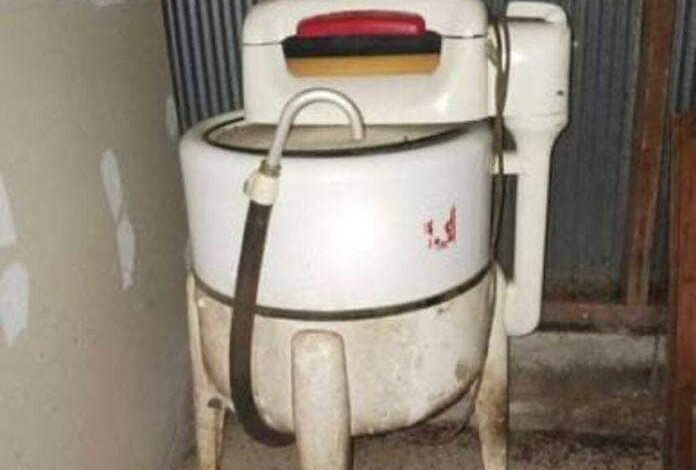
This device, known as a wringer, was usually clamped onto the side of a large wash tub. At first glance it looked unusual: two tightly pressed rollers mounted together with a hand crank attached. Yet its purpose was brilliantly simple.
Instead of twisting clothes by hand, a person would feed the soaked fabric between the rollers while turning the crank. As the rollers gripped the cloth and pulled it through, they squeezed out much of the trapped water in seconds. The result was clothing that was far lighter and easier to hang out on the line.
It didn’t eliminate the hard labor of washing, but it removed one of the most punishing steps.
For households that spent hours each week doing laundry, this small invention saved enormous effort. It reduced strain on hands and backs, sped up the drying process, and made the entire job more manageable. In a time when most chores demanded relentless physical work, even small improvements like this could feel transformative.
Many families remembered the moment they first owned one. What had once been a back-breaking chore suddenly became a little less painful, a little less time-consuming. In an era before electric appliances, that difference mattered.
Today, when people see one of these old hand-cranked wringers in antique shops or museums, it often looks strange or even comical — an awkward metal gadget with rollers that seem oddly primitive.
But for the people who relied on it decades ago, it wasn’t strange at all.
It was relief.
It represented a step toward a future where housework might eventually become easier. Long before washing machines and dryers took over the job, this simple device helped lighten the burden of laundry day.
To modern eyes it may look like an outdated curiosity.
But in its time, it truly felt like a small miracle.