Emergency Declared in Another Area as a Rare Human Case, Backyard Flocks, and Infected Cattle Reveal How an Avian Influenza Outbreak Is Quietly Testing Public Health Systems, Agricultural Defenses, and Community Awareness Across the United States

Fear did not announce itself with alarms or headlines.
It arrived quietly.
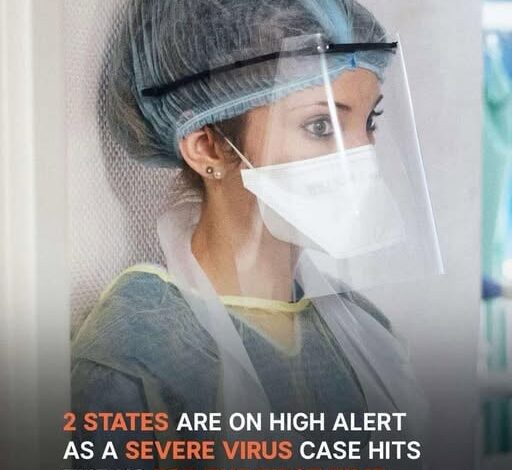
It started with one severe human case in Louisiana, tucked behind hospital curtains, recorded under an anonymous medical file. To most, it was just a single patient. To those paying attention, it was the first ripple in a network that could not be seen—an invisible line connecting homes, farms, markets, and the meals on our tables. At first, authorities treated it as an isolated incident, something confined to one household, one small flock of backyard chickens. But slowly, a larger picture began to emerge.
Connections surfaced where none had seemed apparent before. Backyard coops in quiet neighborhoods, massive dairy operations in California, parents watching the evening news with worry, exhausted health workers tracking cases—all were part of the same fragile system. One overlooked symptom, one missed report, one lapse in protocol could turn a seemingly minor story into a widespread concern.
Initially, the Louisiana case prompted localized investigation. Officials traced the patient’s interactions, trying to map every contact with the backyard flock. But it soon became clear that this was not just about one house or one rural county. The situation raised a more profound question: how intertwined are our lives with the animals we raise, care for, and consume?
Across much of the United States, life alongside animals is ordinary. Chickens scratch in backyard coops, dairy cows roam barns and pastures, and farmworkers begin before dawn to tend to livestock. These routines are familiar, comforting, and essential to daily life—but they also create pathways a virus can exploit. Viruses do not recognize boundaries the way humans do. Home, farm, and food production are porous lines, invisible to the pathogens navigating them.
The Louisiana case became a cautionary example of that reality. A small backyard flock, seemingly innocuous and even charming, can become a conduit. Daily interactions, shared equipment, transport vehicles, and markets form a network through which a virus can travel faster than any single individual can perceive.
Meanwhile, California sounded another note of concern. Officials declared a state of emergency after H5N1 avian influenza, historically confined to birds, was detected in dairy cattle. This unexpected crossover challenged long-held assumptions about the virus’s behavior and added urgency to monitoring agricultural systems.
Experts stress, however, that this is not a reason for panic. The risk to the general public remains low, particularly when proper hygiene and safety practices are followed. Testing, isolation of suspected cases, and vigilant monitoring remain essential tools in preventing broader spread.
Beyond the numbers, this story underscores a more profound truth: the modern world is intricately connected. Our food, the work of farmers, the distribution of agricultural goods, and the public health systems that watch for outbreaks all form an interdependent network. When one link is weakened, the consequences ripple outward in ways that can be surprising and far-reaching.
Farmworkers often stand on the front lines of this risk. Their daily contact with animals is unavoidable, making protection and surveillance crucial—not just for their own safety, but for the resilience of the entire food supply chain. At the same time, parents, consumers, and local communities watch closely, seeking reassurance that the food on their tables is safe, that authorities are acting decisively, and that systems are in place to prevent escalation.
In the midst of possible quarantines, increased testing, and heightened surveillance, one lesson stands out: this is not a story about fear. It is a story about vigilance, discipline, and the quiet diligence of millions of small decisions. Every farmer reporting unusual illness, every doctor observing an unexpected symptom, every lab analyzing a sample, every household following public health guidance—each act may seem minor, but together, they form a protective web capable of containing outbreaks long before they spiral into crises.
And perhaps that is the most critical insight. Not every health alert ends in catastrophe. Often, it is the steady, unseen work of cooperation, responsibility, and careful attention that keeps a situation from becoming a story that shakes the world.
In these moments, quiet vigilance is the strongest defense, and ordinary actions—small, deliberate, consistent—are what stand between fear and control.