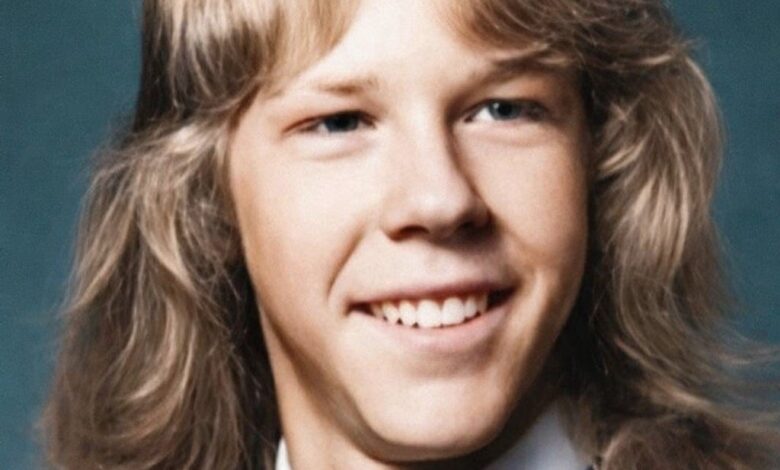
James Hetfield’s life feels less like a straight path and more like a collision between pain and purpose. Growing up in a strict religious environment, he experienced a kind of emotional isolation that left little room for fear, anger, or grief. When his father left the family and his mother later died after refusing medical treatment, those losses didn’t just wound him—they shaped the way he understood the world. What couldn’t be spoken found another outlet.
Music became that outlet.
With a guitar in his hands, Hetfield found a language that didn’t require explanation. The aggression, the precision, the sheer force of the sound—it all carried something deeper beneath it. When he met Lars Ulrich, that internal storm finally had direction. Together, through Metallica, they created music that wasn’t just loud or fast—it was emotionally charged, shaped by themes of abandonment, control, anger, and the lingering shadow of belief and loss.
Albums like Ride the Lightning and Master of Puppets didn’t just define a genre—they carried a kind of psychological weight that listeners could feel, even if they didn’t know the story behind it. The music resonated because it was real. It wasn’t polished pain—it was raw, unresolved, and honest.
But the same intensity that fueled his creativity also followed him offstage.
Fame didn’t erase what came before it. Instead, it amplified everything. Struggles with addiction, bursts of anger, and emotional distance became part of his life, showing that success doesn’t cancel trauma. If anything, it can make it harder to ignore. For years, he carried both the public image of control and the private reality of someone still trying to process what had shaped him.
Eventually, that tension reached a breaking point.
Rehab, therapy, and a willingness to confront his past marked a turning point—not as a clean resolution, but as a shift in direction. Hetfield began to speak more openly about his experiences, about fear, vulnerability, and the long process of understanding himself. The music evolved with him, reflecting not just rage, but reflection and growth.
What makes his story resonate isn’t just what he created—it’s what he endured.
His legacy isn’t only in the riffs, the albums, or the influence he’s had on generations of musicians. It’s in the example he represents: that survival isn’t about outrunning your past, but learning how to live with it, shape it, and, eventually, speak through it.
For many, that’s the most powerful part of his story.
Not the volume.
Not the fame.
But the fact that he stayed—and kept going—long enough to turn pain into something that others could understand.