Two years after the heartbreak of her divorce, Valerie Bertinelli has found love again at 63… better sit down before you see her new man, because there’s a chance you’ll recognize him Wow…

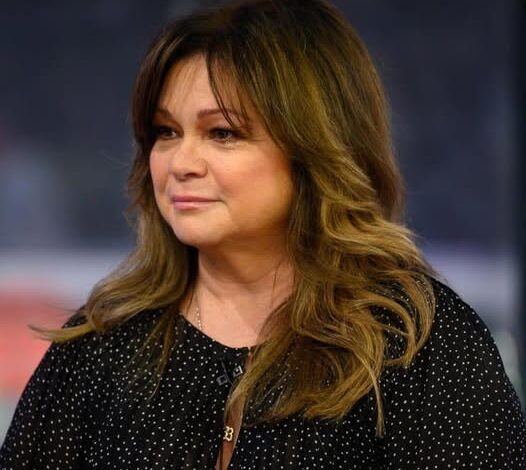
Valerie Bertinelli didn’t just break the internet that day—she quietly shattered a boundary she had set for herself years ago. After seasons marked by grief, a painful divorce, and repeated assurances to the world that she was “done” with romantic love, one small digital gesture shifted everything. A simple Instagram post appeared: a radiant selfie, a caption hinting at contentment, and a lyric from Taylor Swift that fans immediately began to dissect. Within moments, the internet erupted. Comment sections flooded with questions, speculation, and excitement. Could Valerie really be hinting at a new relationship? Had she finally allowed herself to open her heart after everything she had endured?
For those who had followed her journey, the moment struck unexpectedly. Valerie had spent years sharing the raw truth of heartbreak, revealing her process of rebuilding after profound loss, and describing the slow work of becoming comfortable with solitude. She had spoken openly about the pain of losing her former husband, rock legend Eddie Van Halen, whose passing left a permanent imprint on her life. She had also navigated a difficult divorce, a process that forced her to confront the reality that the life she had once envisioned might never return. Over time, she told fans she had accepted a different path—a life framed by independence, pets, close friends, and quiet satisfaction.
For a while, that vision felt real. She joked about living with “six cats and a dog,” embracing humor while acknowledging the deeper truth beneath it: she had closed the door on romance. Not from bitterness, but from self-preservation. After experiencing love so profound and loss so devastating, she believed she had already lived her great love story. Many admired that decision; some quietly hoped life might still surprise her.
And, eventually, it did.
The romance that emerged was far from a cinematic Hollywood spectacle. Valerie’s connection with writer Mike Goodnough began in the most modern, understated way imaginable: social media. A mutual follow, a thoughtful comment, a message exchanged about writing, life, or shared interests. Gradually, those small exchanges evolved into longer conversations, deeper reflections, and moments neither of them could have predicted. Friendships blurred into something more meaningful, something neither had expected nor sought out intentionally.
For Valerie, the experience was both exhilarating and terrifying. She had spent years learning to stand independently, rebuilding an identity beyond marriage, fame, and grief. Allowing herself to fall in love again meant risking the fragile sense of peace she had worked so hard to cultivate. And yet, there was something in this connection—gentle, patient, unexpectedly grounding—that made the risk feel worthwhile.
The timing of the relationship is what resonates most. It did not appear in a moment of loneliness or desperation. It arrived precisely when she had made peace with the idea of living alone. That subtlety—the quiet, unplanned timing—reminds observers that love often comes not during the chapters of frantic searching, but in the moments after we have stopped looking.
Valerie began to share small, nuanced glimpses with her followers. Not explicit announcements, but subtle cues hinting at newfound joy. Fans noticed a lightness in her posts, a softness that had not been present before. When her connection with Mike became more visible, the reaction online was overwhelming. People celebrated not only the romance itself, but the larger story it represented: that healing does not eliminate the capacity for new happiness.
What makes Valerie’s story particularly powerful is her unwavering honesty. She has never erased or ignored her past. She speaks openly about Eddie Van Halen, about the complexities of divorce, and about grief that still exists alongside her joy. She allows past and present, sorrow and love, to coexist. In doing so, she models a rare truth: life is layered, happiness can be rediscovered, and love—quiet, unassuming, patient—can arrive when we least expect it.
Valerie Bertinelli’s journey is more than a romantic story. It is a testament to resilience, to embracing the fullness of life’s contradictions, and to the idea that hope, healing, and love are never truly finite—they simply await the moment we are ready to receive them.