It is with heavy hearts that we announce the passing of this legendary actor who gave us so much!

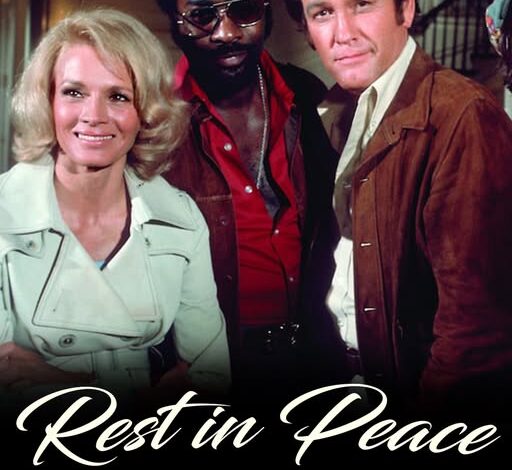
The death of Ed Bernard marks the quiet close of a career built not on showmanship, but on reliability, nuance, and lasting presence. He passed away at 86 on January 23 in Northridge, California—bringing to an end a chapter of television history that may not always have drawn attention, yet left a steady impression on audiences over time.
For viewers of 1970s television and beyond, Bernard was a recognizable figure. He rarely commanded scenes through force or flair. Instead, he offered something more subtle and enduring: a sense of realism. Whether portraying undercover detective Joe Styles or the composed and principled principal Jim Willis, he gave his roles a grounded authenticity that made them feel genuine and lived-in.
Off-screen, his life reflected depth beyond his profession. His family remembered him foremost as a devoted father and grandfather, a man with a curiosity about the world, a love for good food, a dedication to learning, and a strong sense of faith. These qualities revealed a person who lived thoughtfully, not just professionally.
Born on July 4, 1939, in Philadelphia, Bernard’s journey into acting began on the stage. Like many of his peers, he honed his craft in theater, where discipline and immediacy shaped his approach. An early milestone came with his role in the 1969 off-Broadway production Five on the Black Hand Side. That foundation influenced the measured, deliberate style he would carry into film and television.
His move to the screen followed soon after, with early film appearances helping to establish his versatility. But it was television that ultimately secured his place in viewers’ homes.
A turning point came with his appearance in Police Story, particularly the episode “The Gamble,” which led to his role in the spin-off Police Woman. As Detective Joe Styles, he worked alongside Angie Dickinson’s Sgt. Pepper Anderson from 1974 to 1978, appearing in 90 episodes. At a time when female-led crime dramas were rare, the series stood out, and Bernard’s steady performance helped anchor its dynamic. He complemented the show rather than competing for attention, strengthening its realism and balance.
Soon after, he took on another notable role as Principal Jim Willis in The White Shadow. The series used sports as a backdrop to explore social themes, and Bernard’s character provided a thoughtful, stabilizing presence. His portrayal avoided clichés, presenting authority with depth and humanity. After two seasons, his character moved on to a role with the Oakland Board of Education—a transition that reflected the show’s commitment to realism and character growth.
Over the years, Bernard built a career defined by consistency. He appeared across numerous television series, contributing to a wide range of stories without relying on a single defining role. This steady, dependable presence is often overlooked in an industry focused on standout moments, yet it forms the backbone of television storytelling. Bernard was very much part of that foundation.
His final screen appearance came in 2005, the same year he experienced personal loss with the death of his wife, Shirley, after 44 years of marriage. That period marked a quiet step away from the spotlight, though his influence remained.
In later years, his work was honored through inclusion in the Academy of Motion Picture Arts and Sciences’ In Memoriam tribute—a modest but meaningful recognition of a career built on respect and dedication.
What set Bernard apart was not just the breadth of his work, but his approach to it. He never overreached or sought to dominate a scene. Instead, he brought sincerity and restraint, allowing his performances to resonate naturally. It was a style that didn’t demand attention, but gradually earned it.
With his passing, he becomes the last of the core cast of Police Woman to leave us, a reminder of the passage of time and the quiet departure of those who helped define an era of television.
He is survived by his sons, Edward and Mark, and his four grandchildren—Liz, Joshua, Samantha, and Alexandra. For them, his legacy extends far beyond the screen, rooted in the life he lived and the relationships he nurtured.
Ed Bernard’s story is a testament to a different kind of success—one built on dedication, consistency, and authenticity. He didn’t seek the spotlight beyond what his work required. Instead, he showed up, did the work, and left behind a body of performances that continue to feel real, human, and enduring.