From Forgotten to Radiant: The Powerful Transformation of a Woman Once Overlooked by Society Reveals the Deep Impact of Compassion, Dignity, and Human Connection in Restoring Hope, Confidence, and a Renewed Sense of Purpose After Years of Hardship, Loss, and Silent Survival on the Streets

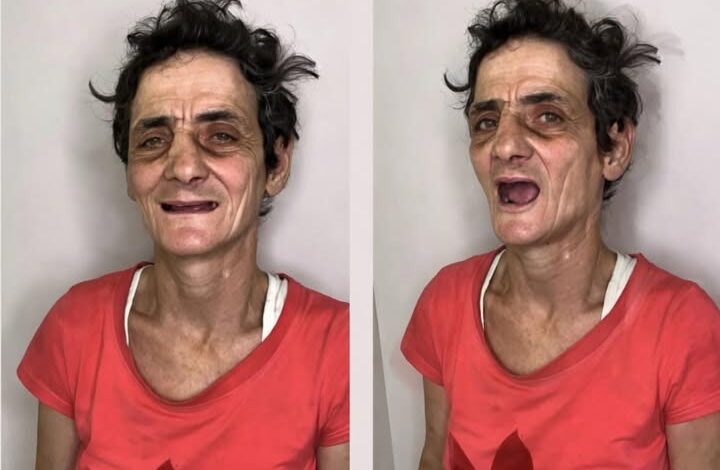
Rita’s life didn’t change because someone came in with grand promises or a plan to “save” her. It changed because, for the first time in a long while, someone chose to see her—to truly see her—and treat her with dignity. There was no dramatic moment, no sweeping gesture meant to impress an audience. Instead, there were small, deliberate acts: the steady patience of a dentist restoring her smile, the gentle care of someone brushing and tending to her hair, the quiet attention given as her hands were cleaned and her nails painted. Each of these moments carried a message far more powerful than anything spoken aloud: you are not invisible, and you are not forgotten.
For someone who had spent so much time feeling overlooked, dismissed, or pushed to the margins, that message was transformative. It wasn’t about appearance alone. It was about recognition—about being reminded that her existence still held value, that she still deserved care, comfort, and respect. These acts didn’t erase her past or undo the hardships she had endured, but they interrupted a narrative she had come to believe about herself.
As Rita began to see her reflection change, something deeper shifted as well. The face looking back at her wasn’t just cleaner or more polished—it was familiar. It was hers. For perhaps the first time in a long time, she could recognize herself not as someone defined by struggle, but as someone with the potential to move forward.
Her grief didn’t disappear. The weight of what she had lived through remained, quietly present. But alongside it, something new began to take shape. There was space now—space for hope, for possibility, for imagining a life that extended beyond mere survival.
That shift showed itself in small but meaningful ways. She stood a little straighter. She held eye contact a little longer. She allowed herself to exist in shared spaces without shrinking or apologizing. The world, which had once felt distant and unwelcoming, began to feel slightly more open—less like something to endure and more like something she might belong to again.
What makes Rita’s story so powerful is how simple its turning point was.
It wasn’t driven by wealth, fame, or extraordinary intervention. It was built on attention, patience, and genuine human care. It reveals just how fragile the boundary can be between feeling discarded and feeling included. How easily someone can slip through the cracks—and how equally possible it is to reach back and bring them in again.
Her experience also challenges a deeper assumption: that change must always be dramatic to matter. In reality, it’s often the quiet, consistent acts of kindness that carry the greatest impact. The ones that don’t seek recognition, but instead restore something essential within another person.
Rita didn’t just regain her appearance—she regained a sense of self.
And in that rediscovery, there is something universal. A reminder that dignity is not something people earn; it is something they deserve. That even the smallest gestures can carry immense weight. And that sometimes, all it takes to change the direction of a life is the decision to care—and to show it, not through words, but through action.
Her story is not about being rescued. It’s about being recognized.
And in that recognition, she found something she had nearly lost: the belief that she still had a place in the world.