Parents give heartbreaking update on five-year-old detained by ICE months after incident

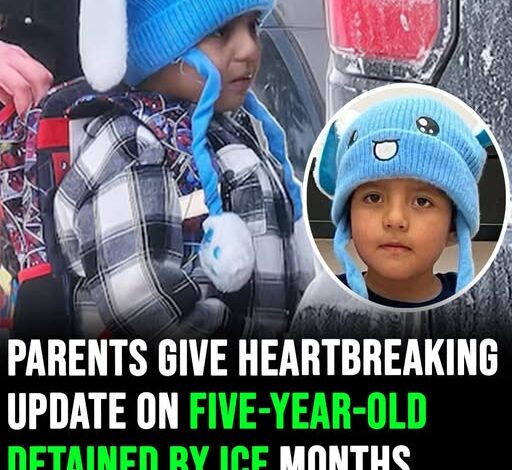
For some, the story of Liam Conejo Ramos is not just a headline—it feels like a fracture point, where an ordinary childhood collided with something far larger and far more complicated than a five-year-old could ever understand. One moment, he was walking home in Minnesota with his father, still wrapped in the small routines that define a child’s world. The next, that sense of normalcy was interrupted by federal agents, and a day that should have ended with cartoons or dinner instead became the beginning of something far more unsettling.
Liam and his father were taken into custody outside their home and later transported to a detention facility in Texas, where they remained for days before a judge ordered their release. On paper, the timeline may not seem long. But for a young child, time stretches differently—days feel endless, and unfamiliar places can quickly become overwhelming. What might read as a brief detention in official records can linger much longer in memory, especially when it interrupts a child’s basic sense of safety.
Since returning home, his parents describe a quiet but profound change. The boy they knew—carefree, curious, quick to laugh—has been replaced by someone more cautious, more watchful. According to their accounts, he now reacts strongly to anything that reminds him of that experience, particularly the presence of law enforcement. What used to be background noise—sirens, uniforms, authority—has taken on a different meaning in his mind.
His daily life has shifted too. Instead of afternoons filled with play, there are now therapy sessions aimed at helping him process something he’s too young to fully explain. His parents say he struggles with fear that the experience could repeat itself—that someone might come again and take him away. It’s a kind of uncertainty that doesn’t easily fade, especially when it settles in so early.
At the center of the story are also conflicting narratives. Authorities have offered one version of events, while the family strongly disputes it, insisting they were complying with the system and not trying to escape it. That tension—between official accounts and lived experience—has only deepened the public conversation around the case.
Even after their release, the situation hasn’t fully resolved. Legal uncertainty still hangs over the family, including the possibility of deportation as their case moves through the system. For Liam, that uncertainty isn’t framed in legal terms—it’s felt in quieter ways, in hesitation, in fear, in the way he now sees the world.
And that may be the hardest part to measure. Not the policies, not the procedures, not even the headlines—but the lingering question that follows them home: what does it take to rebuild a sense of safety once it’s been taken away so early?