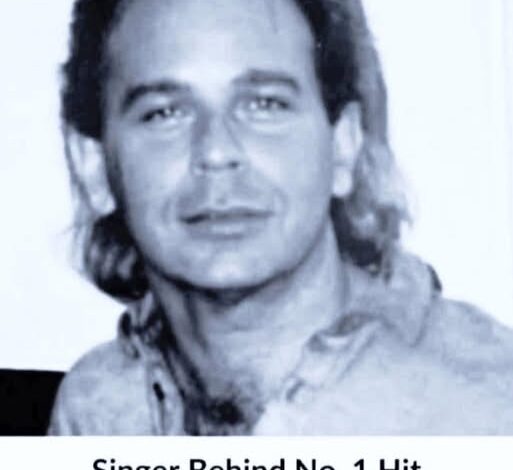
He entered the world as Lugee Alfredo Giovanni Sacco—a name that carried the weight of heritage and melody before he ever sang a note. It sounded operatic, almost destined for a stage larger than the one he would eventually claim. But it was as Lou Christie that he found his place in the cultural heartbeat of a generation, transforming radio waves into something deeply personal.
His voice didn’t just reach listeners—it startled them. That soaring falsetto cut through static like a signal in a storm, urgent and unmistakable. At a time when pop music was still finding its edges, he pushed beyond them, turning emotion into something almost theatrical. Every note felt heightened, as if he were singing not just to be heard, but to be felt.
With songwriter Twyla Herbert, he created something rare—a partnership that blurred the line between composition and storytelling. Together, they crafted songs that didn’t simply unfold; they built. Like gathering clouds before a storm, their music carried a sense of anticipation, tension rising quietly until it broke into something electric.
“Lightning Strikes” was the clearest expression of that power.
It wasn’t just a chart-topping single—it became a moment people lived inside. For teenagers navigating the uncertain terrain of love and identity, the song captured something they didn’t yet have the words for. It spoke of desire and doubt, of thrill and consequence, all wrapped in a sound that felt both exhilarating and dangerous. It wasn’t polished innocence—it was emotional weather, unpredictable and real.
And for a while, his voice was everywhere.
It lived in car radios, in bedroom record players, in late-night broadcasts that blurred into memory. It became part of the soundtrack of growing up—a voice tied not just to music, but to moments.
But beyond the spotlight, beyond the stage and the applause, there was another side to him.
Away from the noise of fame, the intensity softened. He became something quieter, more grounded. He answered letters that most artists would never see, taking the time to respond to fans who only knew him through distant speakers and spinning vinyl. In doing so, he bridged the gap between performer and listener, turning admiration into connection.
Those small gestures mattered.
In towns where his concerts never reached, where his presence existed only through sound, his kindness gave him a different kind of legacy—one built not on spectacle, but on sincerity.
When he stepped away, it wasn’t marked by a grand farewell or a final crescendo. His exit was quiet, almost understated, as if he chose to leave the stage the same way he often connected with people—without needing attention.
And yet, he never truly disappeared.
Because every time that unmistakable high note rises from an old record, it carries with it more than nostalgia. It feels like something still alive, still reaching across time. A reminder that certain voices don’t belong entirely to the past—they linger, echoing in ways that resist fading.
His absence may be physical.
But his sound refuses to vanish.
It remains—suspended somewhere between memory and presence—proving that some voices don’t learn how to disappear.
They simply keep singing, long after the world has gone quiet.