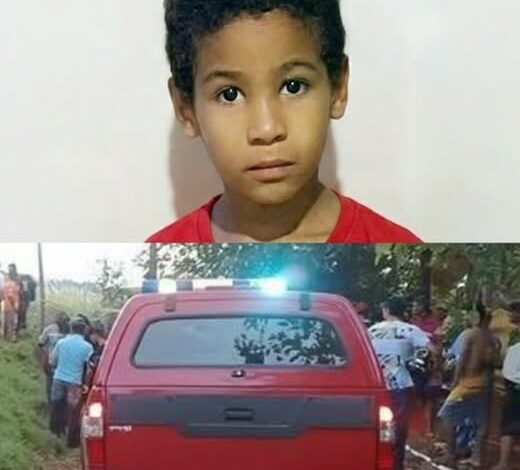
The town had begun bracing for something unspoken long before the call ever came. Fear didn’t arrive all at once—it settled slowly, seeping into quiet streets and familiar homes until even the safest places felt uncertain. For four long nights, sleep became something people pretended to have. Every sound carried meaning. Every shadow felt heavier than it should. And with each passing hour, hope—once steady—began to thin.
It started with a disappearance that made no sense.
One moment, life was ordinary—a child playing, a family moving through the rhythm of a normal day. And then, without warning, there was only absence. No trail. No clear answer. Just a silence that replaced something that should have been full of laughter.
The name Tallyson spread quickly.
It moved through the town like an echo—spoken in hushed tones at grocery stores, repeated over urgent phone calls, carried from one neighbor to another. It didn’t matter who you were or how well you knew the family. A child was missing, and that alone was enough to pull people together.
Search efforts began almost immediately.
Volunteers came from everywhere. Some knew the family. Many didn’t. It made no difference. The woods surrounding the town became the focus—dense, quiet, and far more disorienting than most had realized. Paths twisted. Landmarks blurred. It was easy to lose direction, easy to feel small.
But no one stopped.
Flashlights cut through the darkness each night. Boots pressed into damp earth. Voices called his name again and again, even when the silence gave nothing back. Backyards were searched repeatedly. Fields were walked over and over, as if persistence alone might uncover what had been missed before.
Parents held their children closer.
The fear wasn’t distant—it was personal. Every family asked the same question quietly, the one no one wanted to say out loud: What if it were us?
Authorities tried to bring structure—maps, search grids, assigned areas—but emotion had its own direction. People followed instinct as much as instruction, driven by something deeper than coordination: a refusal to give up.
By the third night, exhaustion had taken hold.
Bodies were drained. Voices worn thin. Still, no one wanted to stop. Stopping felt like surrender, and surrender felt impossible.
Then came the fourth morning.
It arrived quietly, like any other. The kind of early hour where the world feels suspended between night and day. A worker near an old shed noticed something out of place—at first just a shape, something that didn’t belong.
He stepped closer.
And then he understood.
In that moment, everything changed.
The call went out again—urgent, but different. No longer searching. No longer calling a name. Just confirming what had been found.
Within minutes, the stillness shattered. Officers arrived. Neighbors gathered at a distance. News spread faster than anyone could contain. Those who had spent days searching now stood still, waiting, holding onto what little hope remained as reality settled in.
The search was over.
But not in the way anyone had hoped.
Grief didn’t come loudly.
It moved slowly, heavily, settling into the town as people tried to process what had happened. Families returned home changed, carrying something they hadn’t before—a weight that didn’t have a name.
For Tallyson’s parents, there were no words. Only a silence that no one could fill.
Neighbors who had stood side by side in determination now stood together in sorrow. The unity remained—but it had shifted. From action to mourning.
Throughout the day, people gathered.
Some brought flowers. Others simply stood nearby, unsure what to do but unable to stay away. As night fell, candles appeared—small, steady lights pushing back against the dark.
Stories began to surface.
Not headlines—but memories. Small, personal moments shared in quiet voices. A laugh. A habit. A smile. Details that reminded everyone that Tallyson was more than a name, more than a search.
He was known. He was loved.
Life didn’t return to normal.
Not right away.
The streets looked the same. The houses unchanged. But something beneath it all had shifted. A kind of awareness lingered—fragile, uneasy, impossible to ignore.
In the days that followed, conversations turned from searching to understanding. Questions were asked without answers. People tried to make sense of something that resisted explanation.
What remained was a quiet determination.
That his story would not fade.
Not just the tragedy—but the way the town responded. The way strangers came together. The way no one turned away, even when hope became difficult to hold.
Support came from beyond the town. Messages arrived from people who had never been there but felt the weight of what had happened. Because something about it was universal.
A child lost.
A community searching.
Hope held until the very end.
And even in the pain, something else remained.
People showed up.
They walked miles. Gave their time. Carried hope for someone they may never have known, but chose to care about anyway.
That doesn’t erase the loss.
It doesn’t make the ending easier.
But it matters.
Because in the middle of fear and uncertainty, something deeply human endured—the instinct to protect, to help, to stand together, even without guarantees.
As the town slowly begins to move forward, those four days will not be forgotten. They will live on in the way people watch over one another, in the way they hold their loved ones a little closer, in the quiet changes no one can fully explain.
Tallyson will be remembered not only for how the search ended—but for how many refused to give up on finding him.
And in that memory, something remains.
Even after everything else has changed.