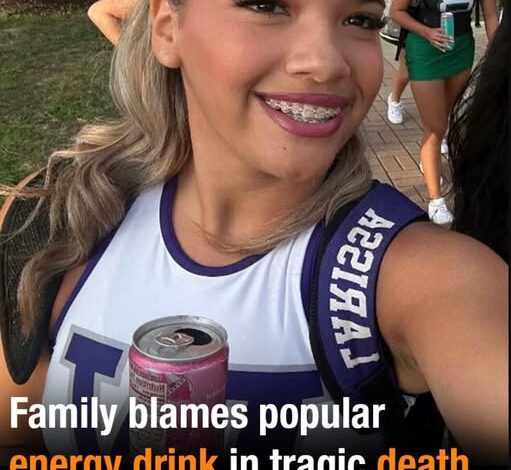
Larissa Nicole Rodriguez’s death has forced a painful reconsideration of something many people rarely question—the safety of energy drinks, especially among teenagers. What once felt like a routine part of daily life—a quick boost before school, practice, or a long day—now carries a far heavier meaning for her family. They remember her not as someone at risk, but as a healthy, active 17-year-old with no known heart issues, someone who trusted that what was sold openly on store shelves was safe to consume.
In the aftermath, medical findings pointing to “stress and large amounts of caffeine” have become impossible to ignore. What had once been just another drink—shared among friends, consumed without much thought—has taken on a different weight. For her family, every detail now feels significant, every overlooked warning a piece of a much larger and more devastating puzzle.
Their lawsuit, seeking more than $1 million in damages, goes beyond financial compensation. It reflects a deeper demand for accountability—an effort to challenge what they believe is a system that allowed potentially harmful products to be marketed in ways that felt approachable, even healthy. They argue that branding and messaging can blur the line between energy supplements and everyday beverages, especially for younger consumers who may not fully understand the risks associated with high caffeine intake.
On the other side, the company maintains that it followed all federal guidelines, including labeling requirements, and did not directly target minors in its marketing. This contrast highlights a broader issue: the gap between regulatory compliance and real-world impact. Just because a product meets legal standards does not always mean its risks are fully understood—or clearly communicated—to those most vulnerable.
At the heart of this case is not just a legal debate, but a deeply human story. It’s about a family trying to make sense of an unexpected loss, searching for answers in a space where certainty is hard to find. It’s also about the broader responsibility shared by companies, regulators, and communities when it comes to products that are widely accessible but not always fully understood.
The conversation sparked by Larissa’s story extends beyond one brand or one case. It raises questions about how energy drinks are perceived, how they’re consumed, and how clearly their potential risks are conveyed—especially to young people. For many, it’s a reminder that “normal” doesn’t always mean harmless.
Behind the legal filings and public statements is a simple, urgent hope from her family: that greater awareness, clearer communication, and stronger safeguards might prevent another tragedy. That no other family will have to look back on something so ordinary and wonder how it became the cause of something irreversible.