Paris Hilton lashes out at mean online comments about son’s head: “He just has a large brain”

For years, Paris Hilton lived under a spotlight that rarely showed her in full. She was labeled, simplified, turned into an image people felt entitled to judge. She endured it—comments about her appearance, her past, her persona—learning over time to deflect, to move forward, to let the noise pass.
But everything shifted when that same scrutiny turned toward her child.
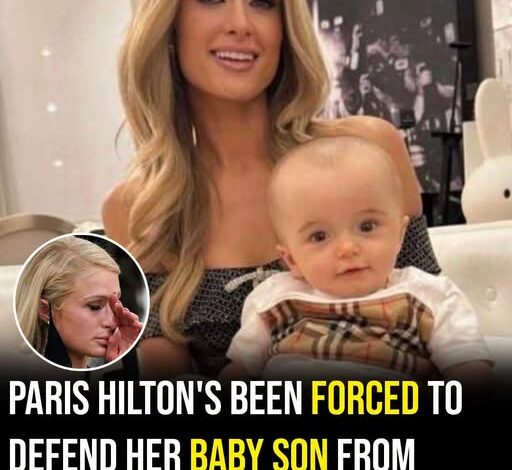
After sharing a simple, joyful photo of her 9-month-old son, Phoenix, during a trip to New York, the response online took a harsh turn. Strangers dissected his appearance, fixating on the size of his head, making cruel remarks, and even questioning the circumstances of his birth through surrogacy. What should have been a moment of pride and love became something else entirely—an example of how quickly online spaces can lose their sense of empathy.
This time, Paris didn’t absorb it quietly.
She responded directly, calling out the comments for what they were and making it clear that her son was healthy, loved, and not a subject for public ridicule. Her words carried a different weight—not defensive in the way people might expect, but firm and protective. She drew a boundary that had long been missing from how she herself had been treated.
At the center of that response is a shift in perspective. Motherhood has changed the way she navigates public attention. It’s no longer just about managing her own image or enduring criticism—it’s about creating a space where her child is shielded from the same kind of judgment she once faced. She has spoken about leaning on her family, grounding herself in what is real and personal, rather than what is projected online.
In defending Phoenix, she is doing more than responding to a moment. She is redefining the narrative around her life and her role in it. The child at the center of the conversation is not an image or a headline—he is a person, growing, learning, and deserving of care without interference from strangers.
The situation also highlights a broader issue. Public figures often exist in a space where their lives are openly discussed, but that visibility can blur boundaries, especially when it extends to their children. Moments like this raise important questions about how far that scrutiny should go, and where responsibility lies in shaping a more respectful environment.
For Paris, the response was clear: some lines are not meant to be crossed. And in setting that boundary, she not only stood up for her son, but also claimed something she had rarely been granted in the past—the space to be seen not just as a public figure, but as a parent protecting her child.