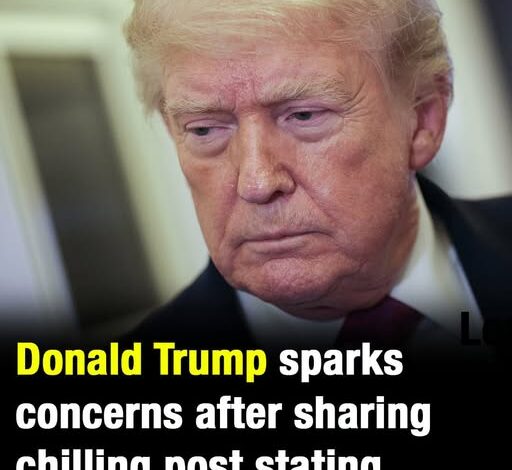
For years, Donald Trump has leaned into unpredictability as part of his public persona, shifting tone and message in ways that can feel abrupt—moving from confrontation to conciliation, sometimes within hours. Supporters often frame this as strategic, a way to keep rivals uncertain. Critics see it as improvisational, even erratic. Either way, it creates an environment where meaning is rarely fixed, and interpretation becomes part of the story.
That’s why a simple, wordless post—like sharing Sinatra’s “My Way” during a tense geopolitical moment—can land with such weight. On its surface, it’s just a song. But context reshapes it. The lyrics, reflective and final, speak of defiance, legacy, and a refusal to yield. In ordinary circumstances, it might read as personal nostalgia or a nod to a familiar anthem. In a moment of heightened tension, it becomes something else entirely—open to projection, speculation, and concern.
For some observers, the choice of song felt symbolic, even ominous. It raised questions about mindset: was it a statement of resolve, a signal of stubbornness, or simply an expression detached from the surrounding events? Others dismissed the reaction as overinterpretation, arguing that not every gesture carries deeper meaning. The divide itself is telling—how the same action can be read as either calculated messaging or incidental expression, depending on the lens applied.
What makes moments like this resonate isn’t just the content, but the ambiguity. When communication is indirect, people fill in the gaps. In a hyperconnected media landscape, that process happens instantly and at scale. A single post becomes a canvas for competing narratives—each shaped by existing beliefs about leadership, intention, and risk.
At a broader level, it reflects a shift in how political signals are received. Leadership is no longer communicated only through formal statements or policy decisions. It also lives in fragments—images, songs, short posts—each capable of carrying symbolic weight. And when those signals are unclear, they can amplify uncertainty rather than resolve it.
In that sense, the unease surrounding the post says as much about the environment as it does about the individual. It highlights how, in moments of tension, ambiguity can feel like a warning, even when its meaning is uncertain. When the inner state of a leader is difficult to read, even small, cryptic gestures can take on outsized significance—not because they are definitive, but because they leave so much open to interpretation.